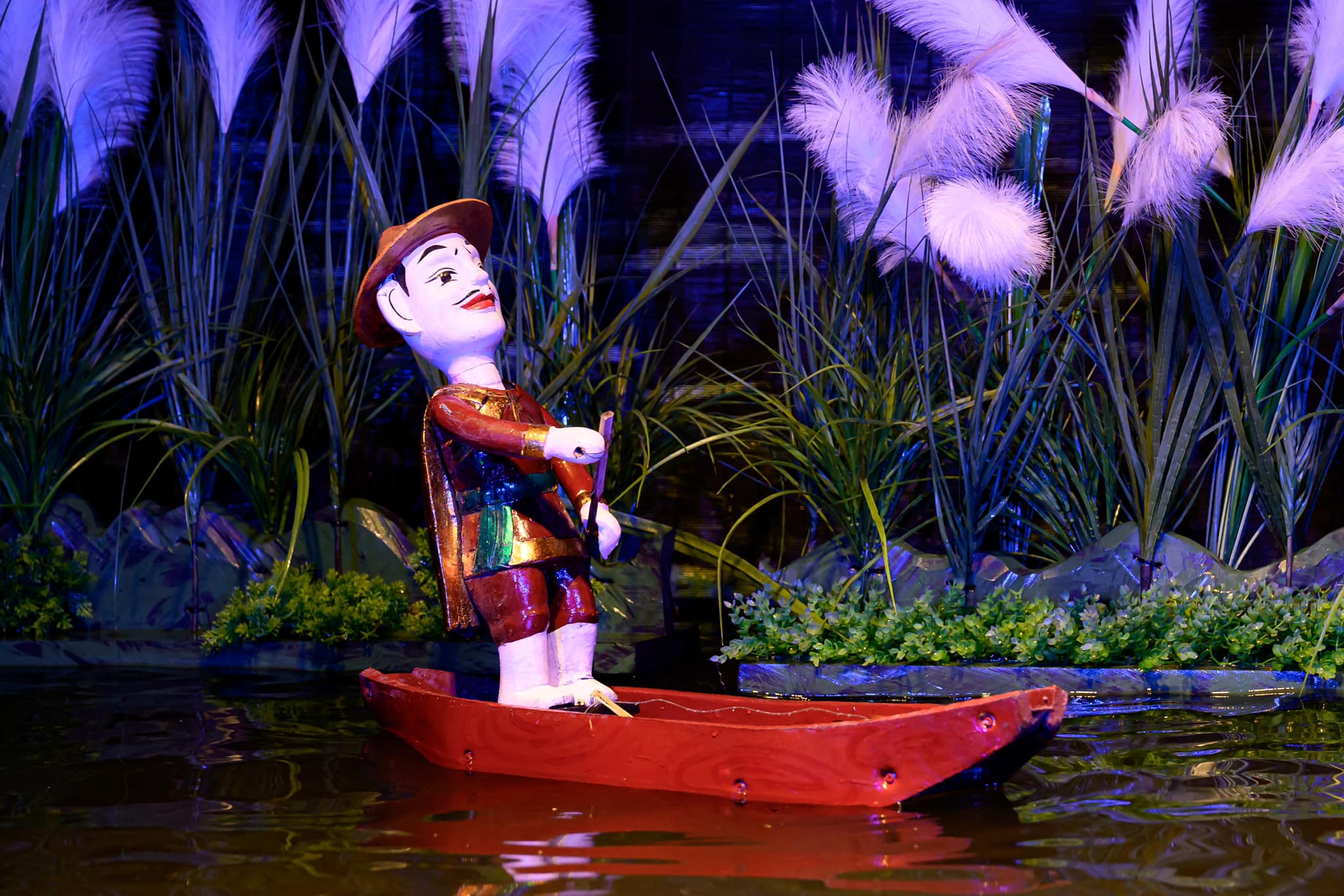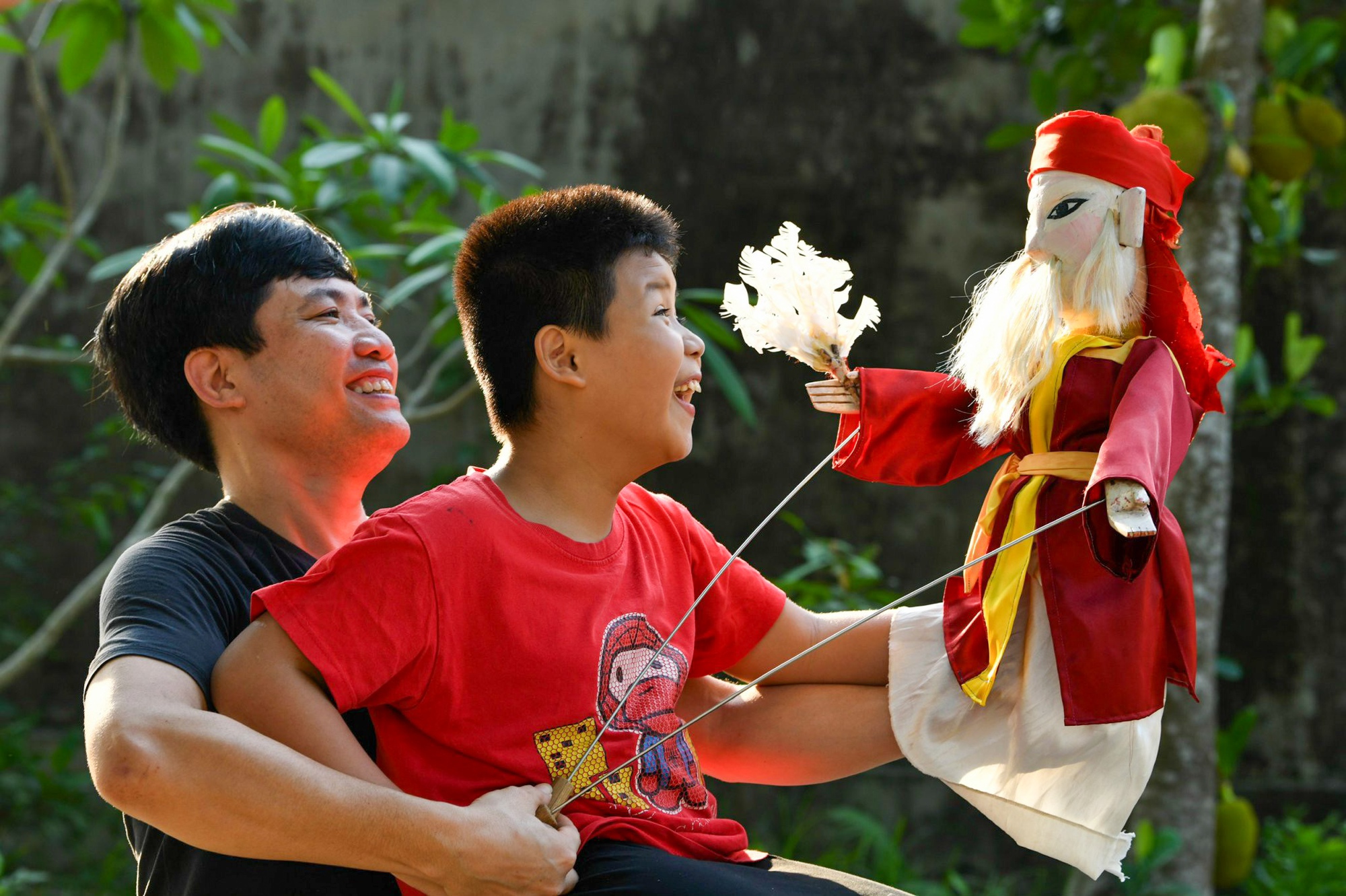
From misty village ponds to sold-out theatres and international stages, Hanoi is reimagining puppetry as a cultural signature of the capital.
Reviving an ancient art
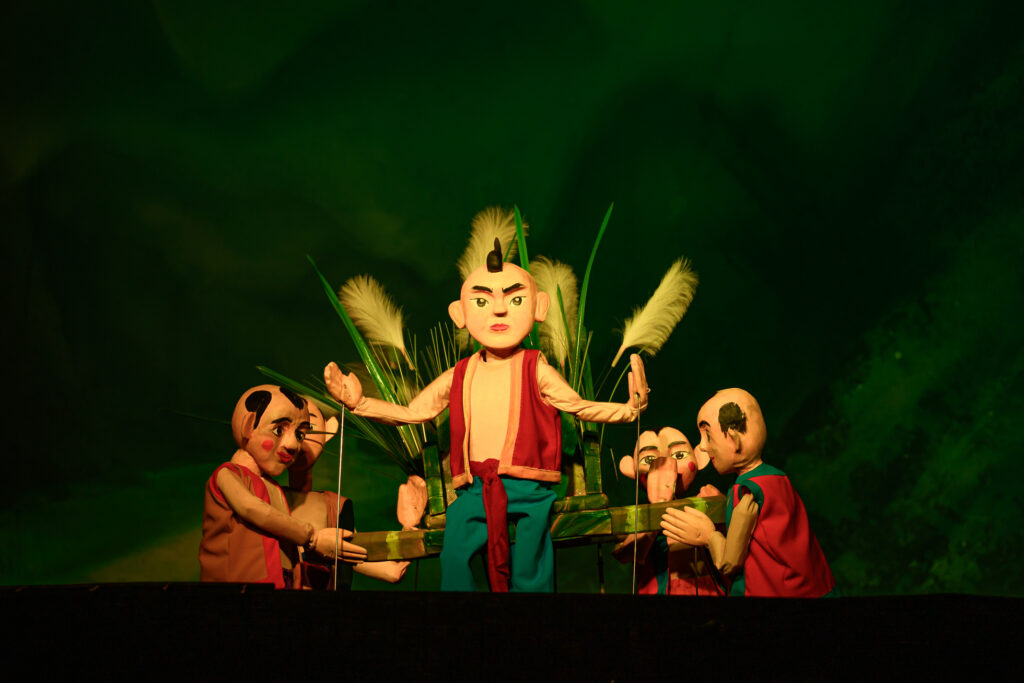
The puppet show “The Emperor of the Reed Flag” performed by artists from Thang Long Water Puppet Theatre won the Gold Medal at the 2024 Hanoi Open Theatre Festival. Photo courtesy of the theatre
Hanoi is setting its sights on turning water puppetry, one of Vietnam’s most distinctive folk arts into a signature cultural product that both preserves an ancient tradition and fuels a vibrant creative economy. The ambition is clear: transform a rural art born from rice paddies into a modern cultural symbol capable of captivating audiences at home and around the world.
“Puppetry has endured countless ups and downs to become a distinctive cultural language of the Vietnamese people,” remarked Le Thi Anh Mai, Deputy Director of the Hanoi Department of Culture and Sports, at a recent symposium on heritage preservation.
She emphasized that in an age of globalization and rapidly shifting entertainment habits, puppetry must evolve with professionalism and creativity if it is to resonate with contemporary viewers.
As Hanoi positions cultural industries as new economic drivers, puppetry stands out as an art that can thrive with the right investment and vision. A shining example of this potential is the Thang Long Water Puppet Theatre, which has become a powerhouse of cultural tourism.
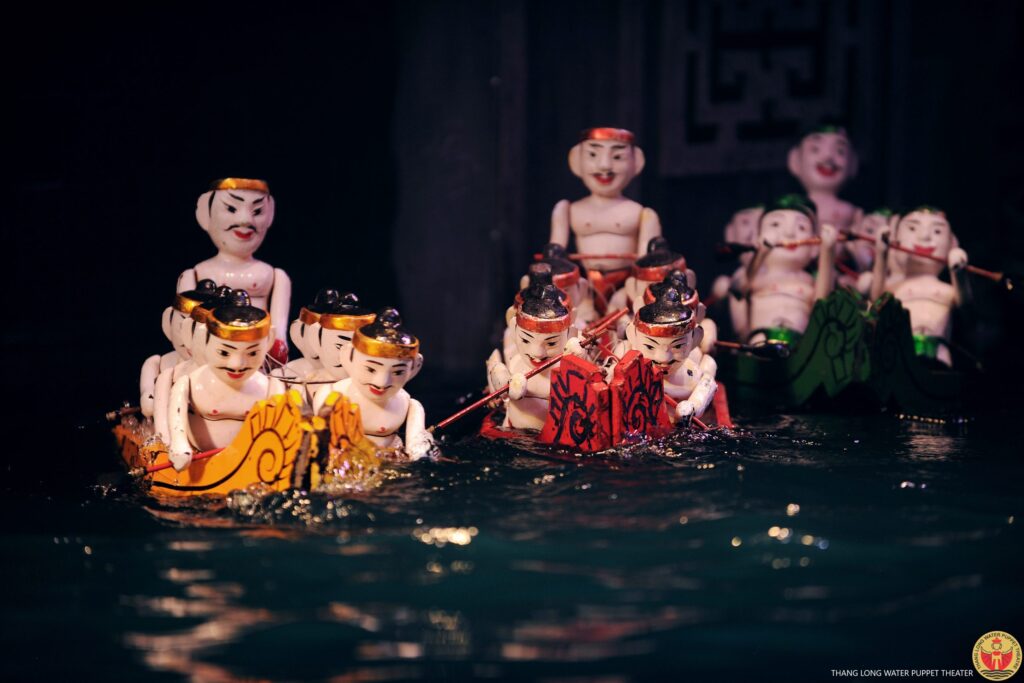
A scene from a water puppet show capturing the lives of Vietnamese villagers. Photo: Thang Long Water Puppet Theatre
On busy days, six to eight shows introduce over a thousand visitors, most of them foreign travelers, to the wonder of wooden puppets gliding across water to the rhythms of traditional music. Its growing global prestige was reaffirmed in 2024 when it received the Travellers’ Choice Award from a U.S. travel organization, adding to its resume of international tours spanning more than 40 countries and territories.
For many industry experts, this model demonstrates how a traditional art, presented with professionalism and storytelling flair, can anchor a city’s creative tourism brand.
Heritage beneath the surface
The pull of puppetry lies not only in its spectacle but also in the cultural memory it carries. As Tran Thanh Hien, Director of the Thang Long Water Puppet Theatre explained, the various forms of Vietnamese puppetry, including water, rod, human, string and shadow embody the agricultural aesthetics of northern Vietnam.
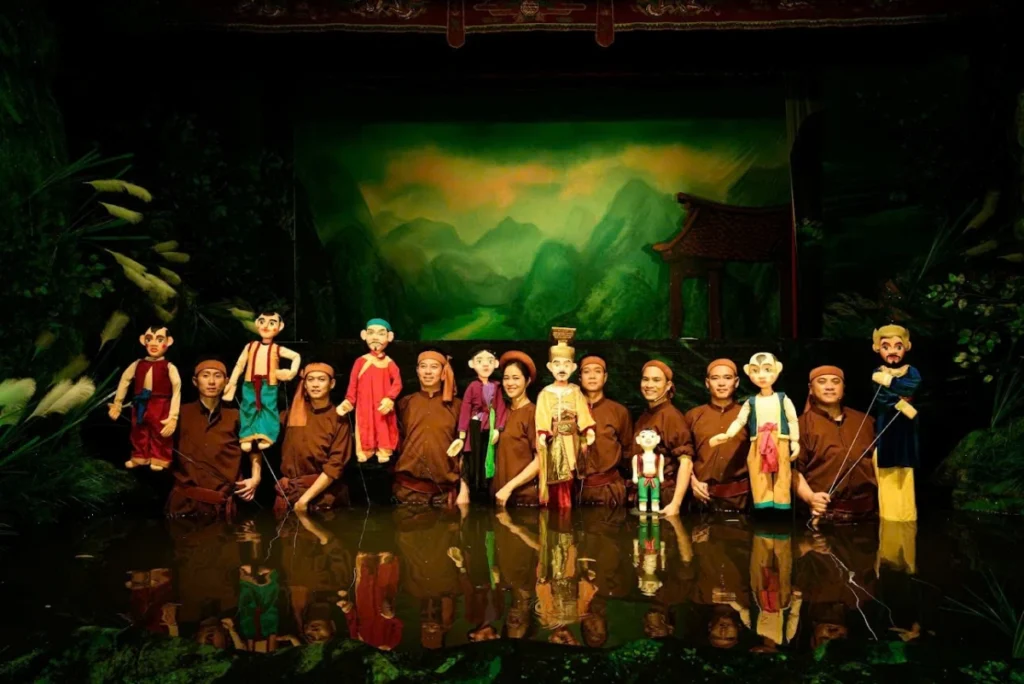
Behind the scene: Artists of the Thang Long Water Puppet Theatre at work with their puppets
“Vietnamese puppetry is a rare heritage with tremendous appeal. It has the potential to become a cultural product of significant economic value if connected to cultural tourism and international promotion,” he said, stressing that creativity must guide Hanoi’s cultural-industry strategy.
Yet behind the curtain, traditional puppet guilds face struggles that rarely make it into tourist brochures.
In Dao Thuc Village, artisan Dang Minh Hung described how water puppets deteriorate quickly and require constant replacement, a costly burden for a village troupe with limited funds. The lack of resources makes it difficult to experiment with contemporary elements or train younger performers. Performances have become scarce, revenue thin and apprentices difficult to retain.
The decline in guilds is stark: as artist Hoang Tuan, former director of the Thang Long Water Puppet Theatre, recalled, Hanoi once boasted more than 20 puppetry guilds in the early 20th century; now, only half remain.
He believes the shortage of researchers and critics, along with the absence of puppetry in schools, has weakened the craft’s foundation.
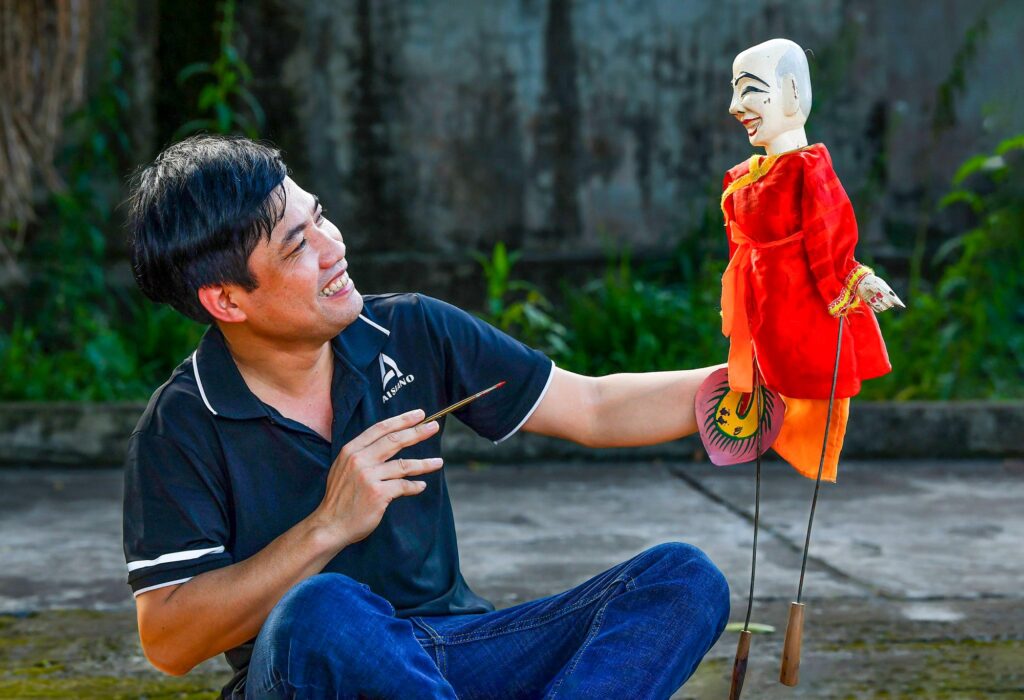
Meritorious Artist Pham Cong Bang from Te Tieu Puppetry Village, My Duc Commune, Hanoi. Photo: bvhttdl.gov.vn
From Te Tieu Puppetry Village- today the only place where land puppetry is still practiced- Meritorious Artist Pham Cong Bang expressed hopes for more performance spaces and stronger, long-term support to nurture the next generation.
“A land-puppet act may last only three to five minutes, but creating a new piece can take weeks, even months, of preparation and rehearsal. It demands immense dedication from artisans-especially the young ones stepping into the craft,” he explained.
Despite these challenges, there is widespread agreement that puppetry possesses all the elements of a compelling creative product: uniqueness, symbolism, humor, storytelling depth and strong tourism appeal.
The recent success of the Thang Long- Hanoi Festival 2025 reinforces this belief, highlighting how art forms like puppetry can help shape Hanoi’s identity as a culturally rich and forward-looking metropolis.
Folk art captivates audiences
To witness the magic of Vietnam’s puppetry is to step into a world where centuries-old traditions come alive in the most unexpected ways. At the Thang Long Water Puppet Theatre in Hanoi, audiences from across the globe find themselves captivated by a centuries-old art form that marries storytelling, music, and dance atop shimmering pools of water.
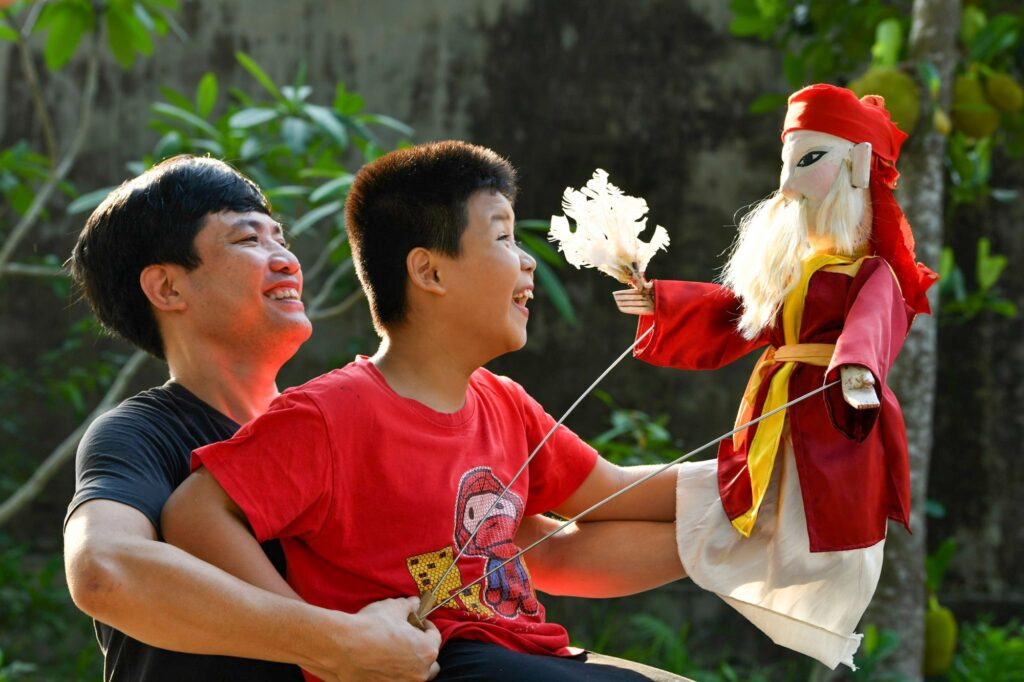
Igniting a love for puppetry in the next generation. Photo: bvhttdl.gov.vn
Maria González, visiting from Spain for the first time, described her experience: “The moment the puppets emerged from the water, people will feel that they have been transported into a Vietnamese village folktale. The music, the splashing, the colors just unlike anything in Europe.”
Meanwhile, Kenji Sato, a Japanese cultural enthusiast, compared it to traditional bunraku puppetry: “I’ve studied traditional Japanese puppetry like bunraku, but water puppetry is entirely its own universe. The skill involved is incredible. Even without knowing Vietnamese, I understood the humor and the emotions. It shows how storytelling can cross borders.”
These impressions capture what travelers from around the world feel when they step into the Thang Long Water Puppet Theatre where they can experience Vietnam’s living culture up close. It’s a reminder that this centuries-old art still has the magic to delight and inspire visitors from every corner of the globe.
Hanoi’s long-term vision is to bridge the gap between traditional guilds and modern cultural industries, giving puppetry both a foundation and a future. From the determined efforts of artisans in rural guilds to the international acclaim of the Thang Long Theatre, the city is piecing together the elements needed to help the Vietnamese art of puppetry soar once again.
By Cam Anh