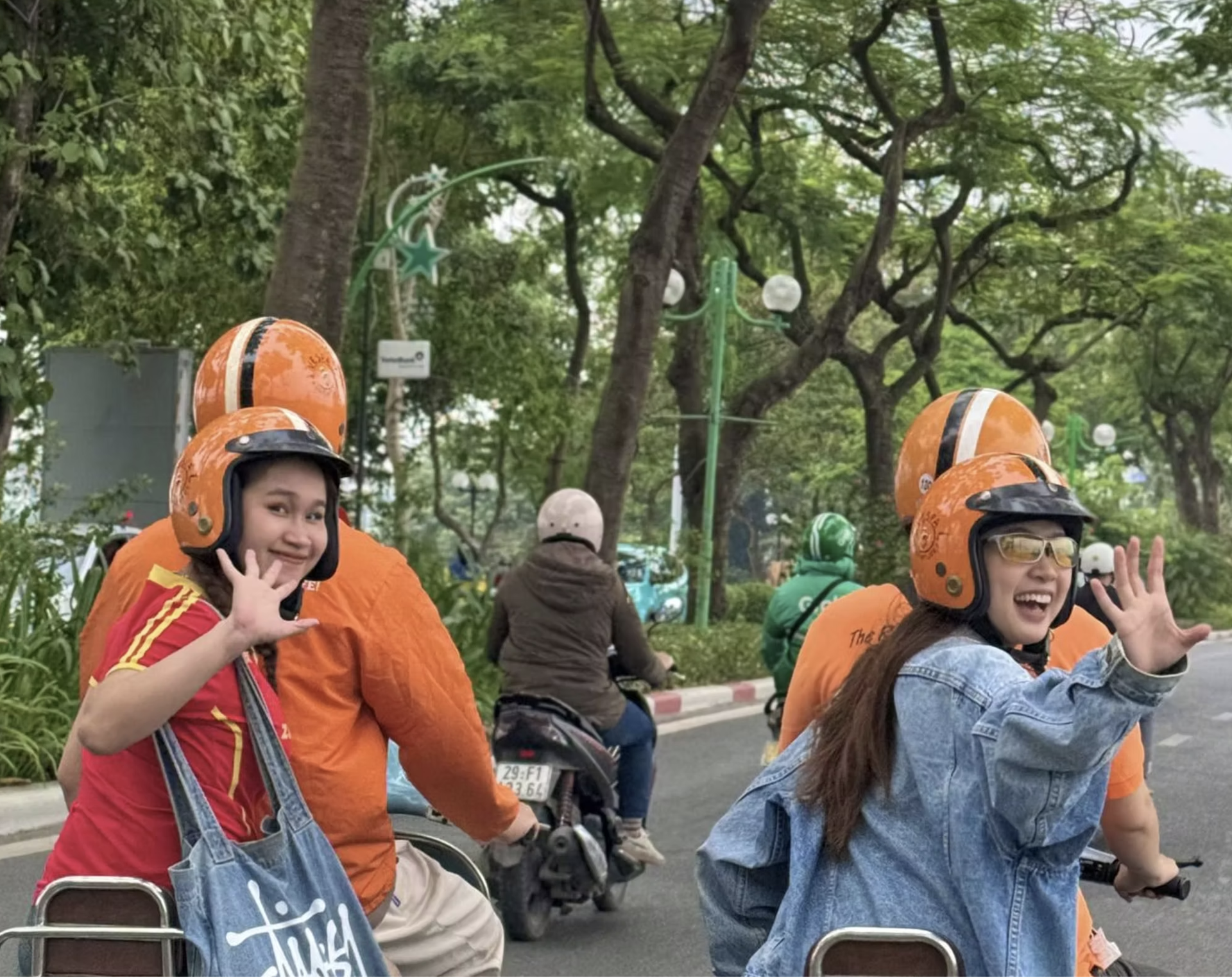
A vintage Vespa ride takes travelers beyond Hanoi’s busy streets into a world of heritage, rice fields and timeless charm.
The Hanoi Tourism Association has launched a daily countryside tour on vintage Vespa, taking visitors across Dong Anh Commune with stops at Long Bien Bridge, Co Loa Citadel and traditional craft villages.
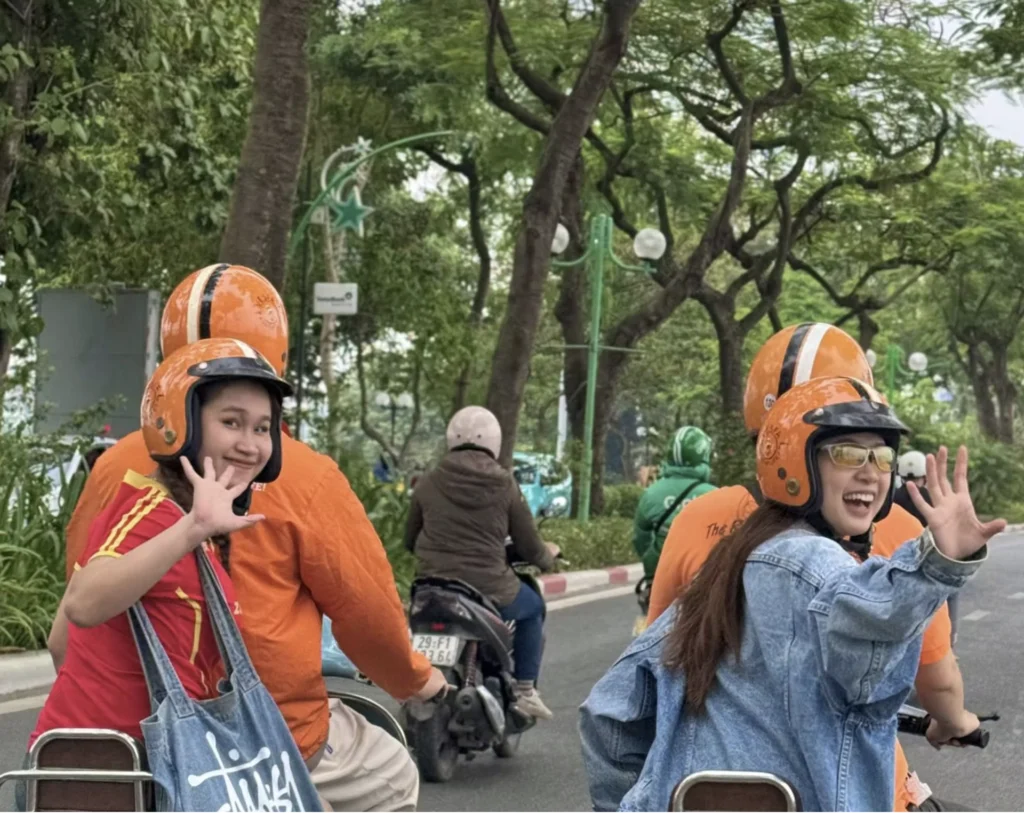
Young travelers enjoy the ride and wave to the camera during Hanoi Vespa countryside tour. Photos: Vespaadventures
The four-hour journey departs at 8.00 a.m. and 1.00 p.m., priced from VND1,500,000 (US$57) per person, including Vespa, English-speaking guides, tea session, refreshments and insurance.
Designed for both international travelers and Hanoians, the ride blends cultural heritage, rural landscapes and authentic local encounters. Crossing the century-old Long Bien Bridge sets the tone for the journey. Engines hum against rusted steel while the Red River flows below, carrying sand barges and small fishing boats.
The bridge, built by the French more than a hundred years ago, has stood through wars and daily life, from bicycles in the past to endless motorbikes today. Its paint is peeling, the arches worn, yet the spirit of the city lingers in every beam.
For many Hanoians, the bridge recalls childhood walks, market trips, or quiet evenings watching the river. For travelers, the view feels both simple and cinematic, a doorway into Hanoi’s layered past.
Unlike fast-paced motorbike tours, this ride focuses on immersion. Travelers greet farmers in rice paddies, follow bamboo-shaded lanes, and watch children waving from village houses. “As a guide, I feel so happy to see the bright smiles of visitors discovering these places,” said Yen Navie, a tour guide.
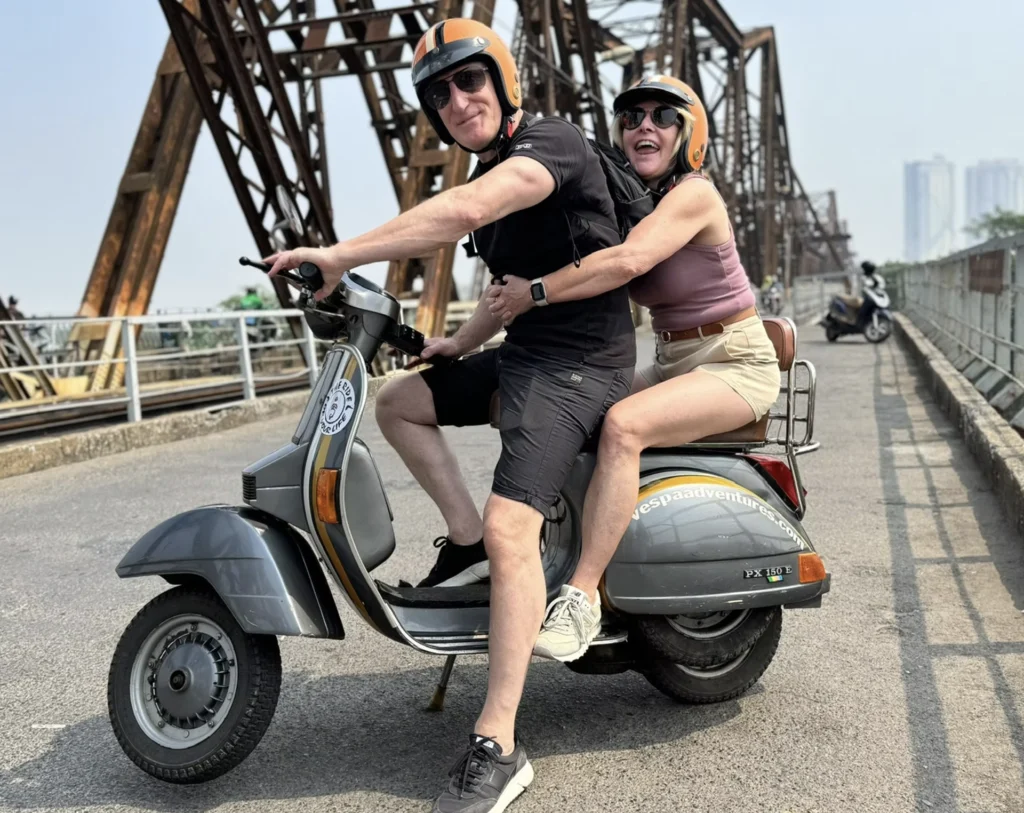
A foreign couple rides a vintage Vespa across the historic Long Bien Bridge
The route features Co Loa Citadel, a fortress built more than two millennia ago. Mossy gates and surrounding rice fields frame a landscape where farming continues as it has for generations.
Stops at traditional villages add another layer. Visitors meet artisans molding clay, carving wood and weaving bamboo.
A tea session with a tra su (tea master) introduces the ritual of Vietnamese tea, from warming the pot to savoring each sip.
For many international guests, the appeal lies in seeing Hanoi beyond its busy streets.
Motorbikes remain the main form of transport in Vietnam, shaping how people move, work and socialize. In Hanoi, entire families ride together on one scooter, while students, office workers and vendors share the same crowded lanes.
For visitors, joining this flow on a Vespa feels both daring and liberating. Sitting on the back of a motorbike, the view is wide open – no car window to block the scenery, no barrier between traveler and the city.
Every sound and smell of Hanoi, from sizzling street food to incense drifting from pagodas, comes closer and more vivid.
“I came across the tour through a recommendation on The New York Times and was very excited,” said Ann Corbitt, a traveler from the US.
At first I felt nervous because of the traffic flow and the speed, but it gave me a chance to see life like a local, meet people and enjoy authentic food.”
The package covers Vespa with private driver, helmet, raincoat, snacks, bottled water and travel insurance for participants under 75 years old. Pick-up and drop-off in central Hanoi make it accessible for both first-time and returning visitors.
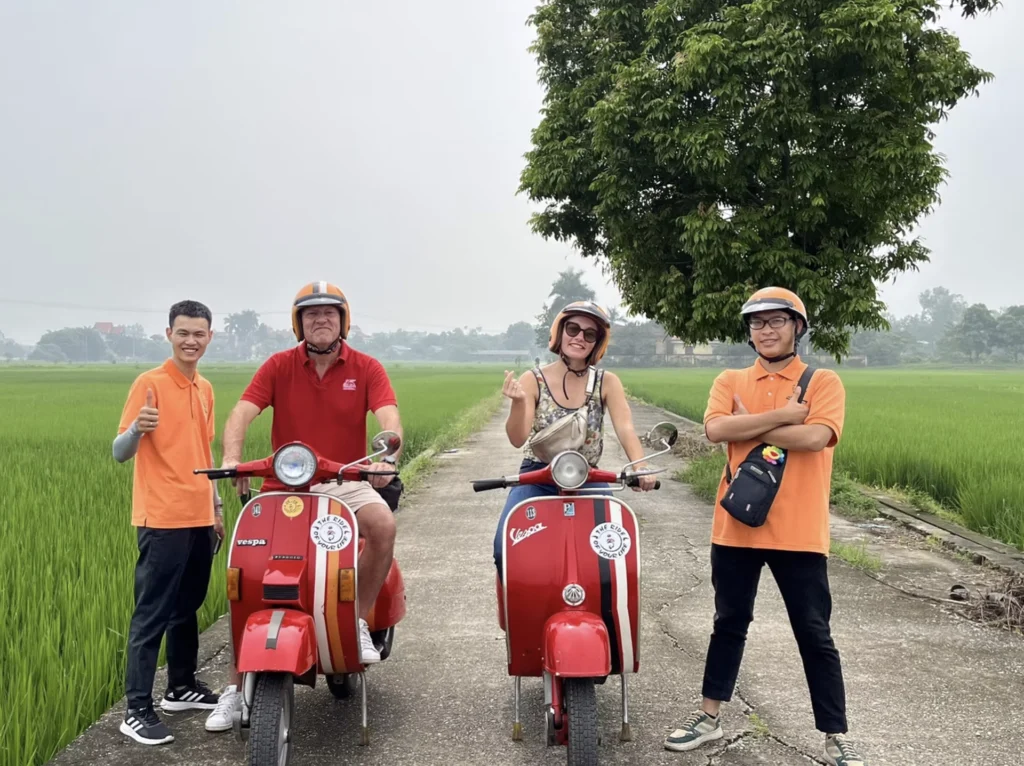
Foreign visitors pose with guides on red Vespas in the middle of Hanoi’s green rice fields.
Each season offers a new backdrop. Golden rice fields in autumn, pink blossoms in spring, and lush green in summer.
Drivers say foreign visitors are especially keen to capture these scenes. “They really love this tour and are eager to check in at every stop,” said Khang, a Vespa driver.
For Hanoians, the Vespa tour offers a fresh perspective. Locals see pride reflected in visitors’ interest, while travelers leave with stories to tell.
“I grew up crossing Long Bien Bridge, and riding it on a Vespa with foreign friends made me rediscover my own city,” said Le Minh Hoang from Hoan Kiem Ward.
At the end of the ride, the Vespa heads back toward the skyline of Hanoi. Behind them lies the smell of clay and rice fields, the warmth of tea, and the echoes of engines across Long Bien Bridge.
The memory lingers like a bridge itself, a link between past and present, heritage and discovery.
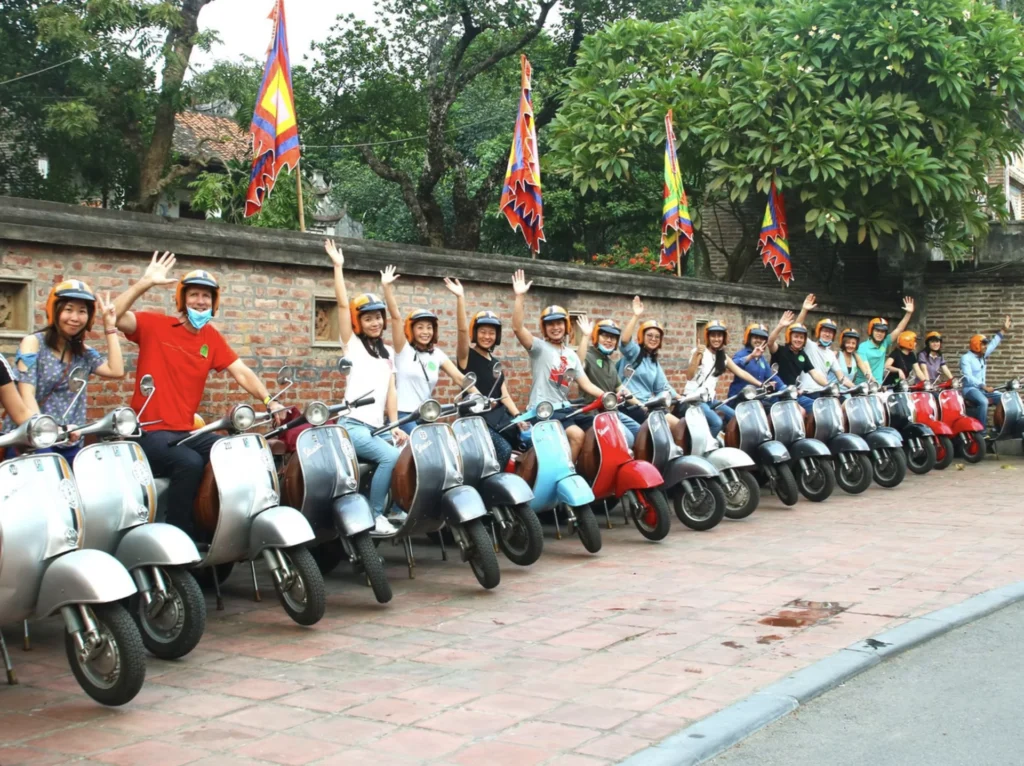
Tourists and local riders line up on vintage Vespas before starting the countryside journey to Dong Anh Ward.
Source: The Hanoi Times