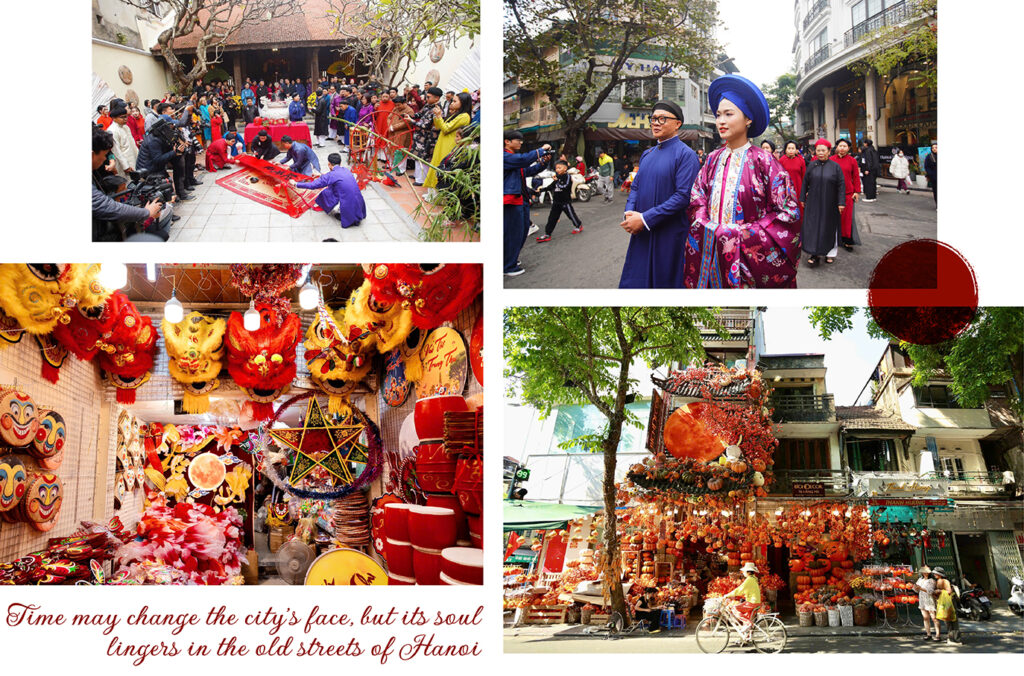
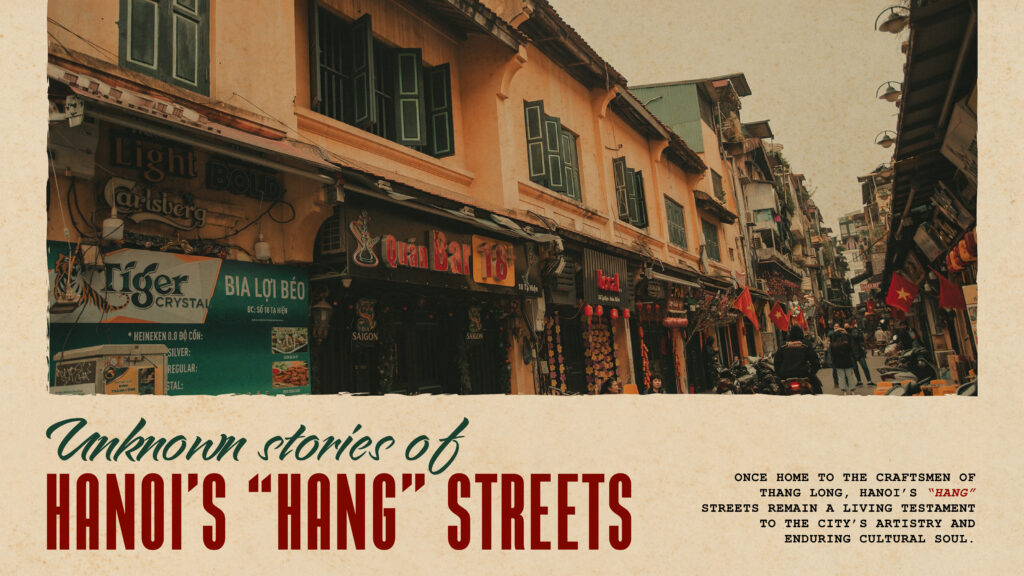
Through countless turns of history, Hanoi’s old guild streets stand as quiet witnesses to time. Each cobblestone or weathered signboard carries the essence of Thang Long – Ke Cho (the market place), the cultural heart of Vietnam for more than a millennium.
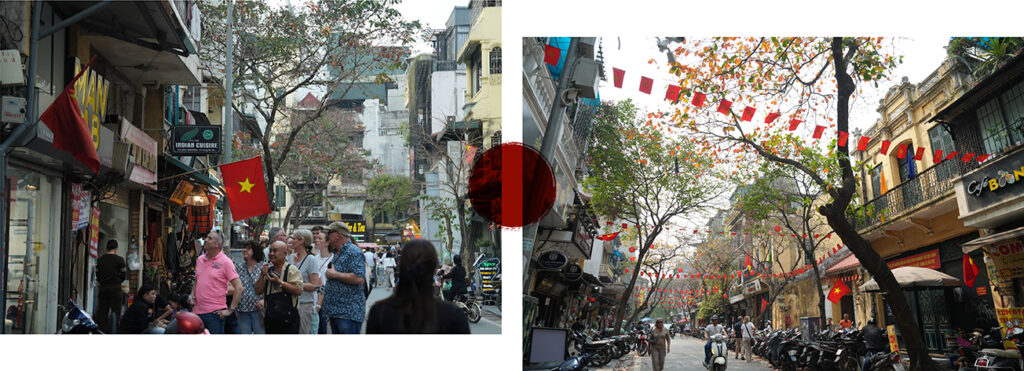

Since ancient times, Hanoi has thrived as the bustling heart of the Red River Delta, where the bounty of mountains, plains and coasts converged in lively markets. Everyday goods, including combs, hats, cloth, fans, scales, shoes mingled harmoniously with rustic treats like sweet soups, rice vermicelli and congee, while farming tools, such as hoes, rakes, woven baskets added their earthy presence to the vibrant scene.
Amid this lively trade, the workshops of the ancient Thang Long Citadel (today’s Hanoi) flourished, nurturing traditional crafts such as pottery, bronze casting, stone carving, lacquerware and weaving. Often produced in rural villages during the quiet months of the agricultural cycle, these handmade treasures found their way into the town markets, infusing them with artistry and charm.
Thanks to its strategic location, Thang Long became a magnet for both local and foreign merchants and a stage where rural artisans showcased their finest creations. Over time, streets naturally took shape around clusters of similar goods, giving rise to the famed “Hang” streets- each dedicated to a single craft or product, each preserving a fragment of Hanoi’s cultural soul.
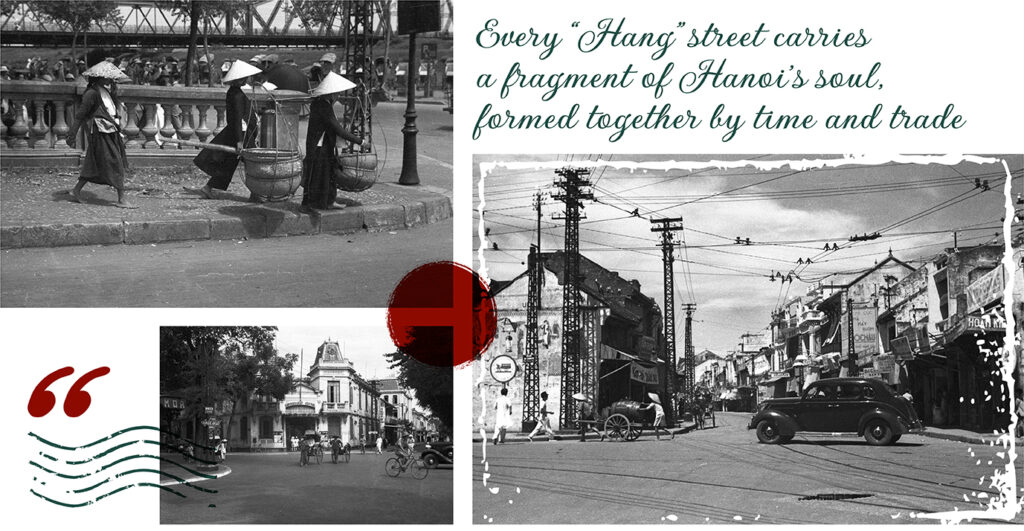
Italian missionary Giovanni Filippo de Marini (1608–1682), who arrived in Thang Long in 1663, observed: “At the beginning of each street, there is a wooden sign that reads the name of the items.”
These simple wooden signs, hung by the traders themselves to guide buyers, were never official markers. Yet, they endured as the foundation of the street names beginning with “Hang,” a word that embodies both “guild” and “a row of shops,” echoing centuries of commerce and craft.

The story of Hanoi’s “Hang” streets is also a story of evolving geography and governance. According to the Hoai Duc Prefecture General Map – the first map of Hanoi created under modern cartographic principles in 1831 – there were no streets officially bearing the word “Hang.”
That year, King Minh Mang (1791–1841) launched a sweeping administrative reform, redrawing provincial boundaries and renaming many places. The newly established Hanoi Province consisted of four prefectures and fifteen districts. Within what became known as the “36 Hanoi Guilds,” many streets specialized in trading a single category of goods.
As noted by French historian Philippe Papin in History of Hanoi, street names beginning with “Hang” appeared in official documents between 1831 and 1850. The Nguyen Dynasty’s Geography of the Unified Great Vietnam recorded that, during the reign of King Tu Duc (1829-1883), Hanoi had 19 streets, 12 of which began with “Hang.”
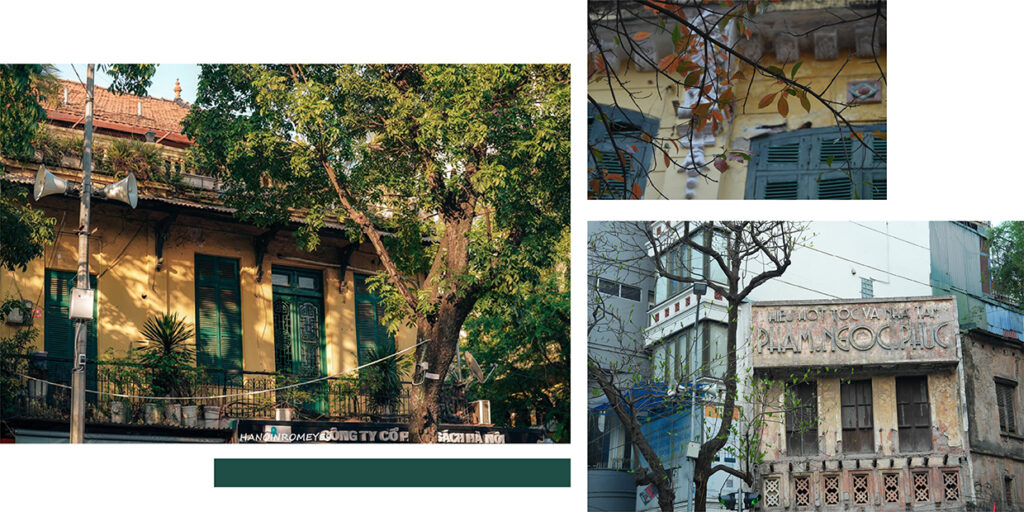
Later works continued to reflect this cultural identity. In the Vietnamese Poetry and Literature Anthology (1968), educator Duong Quang Ham (1898-1946) compiled the beloved folk song 36 Hanoi Streets, which included 32 streets named “Hang X.”
Similarly, scholar Truong Vinh Ky in “Trip to Tonkin in the Year of the Pig”, 1876, listed 21 streets with 13 “Hang” names.
Following the French occupation of Hanoi in 1883, city management became more formalized. A decree by the Resident-Superior of Tonkin on April 21, 1890, standardized street lengths, widths and sidewalks – officially recognizing the “Hang” street names.
By then, Hanoi counted 67 streets and four roads, with 38 beginning with “Hang.” Through revolutions and wars, the capital today still retains around 50 such names, among them Hang Bai, Hang Bong, Hang Dao, Hang Dau, Hang Ngang, Hang Than and Hang Trong – each a timeless echo of its original craft.
Currently, 37 “Hang” streets await discovery, and with the return of Hang Long Street last September, the Old Quarter’s charm will grow even more enchanting for curious travelers.

In the book entitled “Hanoi – The Thousand-year City”, late Hanoi-researcher Nguyen Vinh Phuc observed that the collection of “Hang” streets was once far larger, though many have since been renamed or merged.
Some transformations tell fascinating stories: Hang Bua (Rake Row) and Hang Cuoc (Hoe Row) merged into Lo Ren (Forge) Street; O Quan Chuong Street was once Hang Chieu Coi, an extension of Hang Chieu; and Cha Ca Street, once Hang Son (Paint Row), was renamed after its famous local dish, the now-iconic Cha Ca La Vong.
Elsewhere, Nguyen Thai Hoc Street was formerly Hang Day (Terracotta Row), now home to the Hang Day Stadium, while Le Duan Street once held the name Hang Co (Grass Row) – a nod to the Hang Co Railway Station, now the Hanoi Railway Station.
The names of the “Hang” streets are pure Vietnamese, preserving the cadence and character of old Hanoi. To Hanoians, these names evoke nostalgia and intimacy – reminders of an age when craftsmanship and community defined urban life.
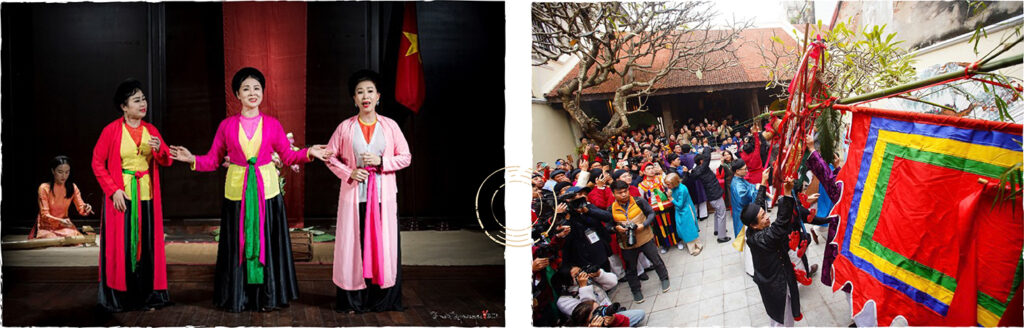
As a folk song praises: “Skillful hands and deft profession, Ke Cho land.” Each “Hang” street once reflected the artistry of a specific craft village. The people who settled here brought their ancestral skills, turning simple trades into refined artistry.
Take Hang Thiec Street, once home to tinsmiths who fashioned oil lamps, incense burners, teapots and trays. Most artisans hailed from villages such as Dan Hoi, Thuong Tin, Phu Thu, Khuong Thuong and Dien. When the craft declined, the street remained associated with metalwork, earning the French name Rue des Ferblantiers, yet Hanoians proudly kept its Vietnamese name.
Or Hang Duong Street, famous for its sweets and candied fruits. During the French era, it was known as Rue du Sucre, or “Sugar Street.” Even today, its preserved shops like Hong Lam, Gia Loi and Tien Thinh continue the tradition, selling dozens of varieties of dried fruit – each with its own flavor and story.

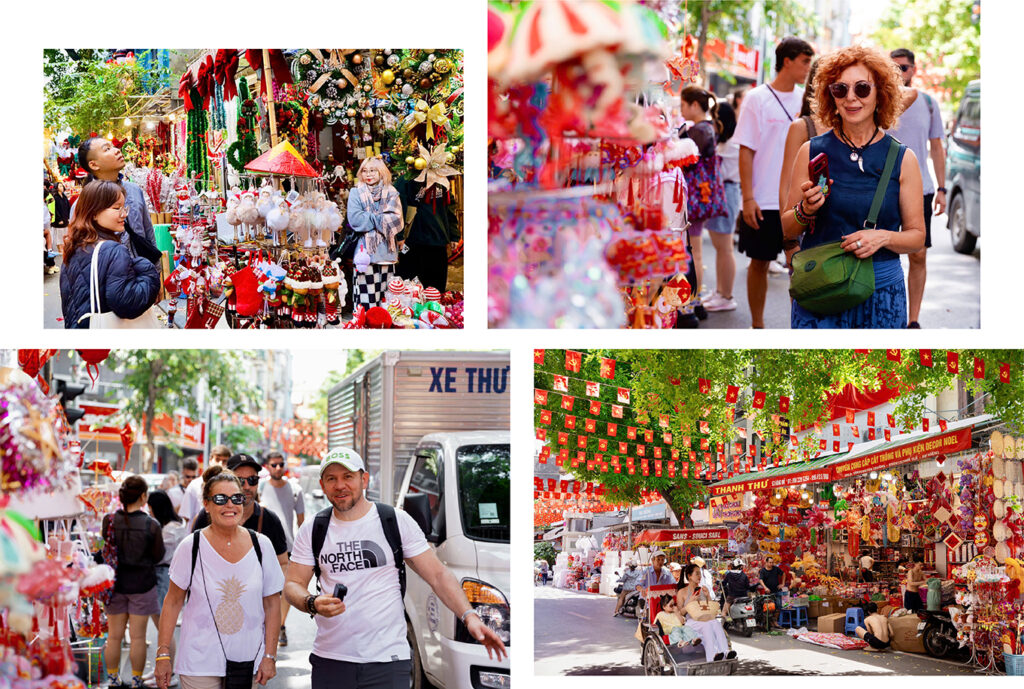
Today, Hanoi’s “Hang” streets form not only a living museum of urban culture but also a major tourist attraction, drawing hundreds of thousands of visitors each year.
Yet, as writer and cultural researcher Nguyen Ngoc Tien warns, time can erode not only architecture but also the intangible spirit of these streets.
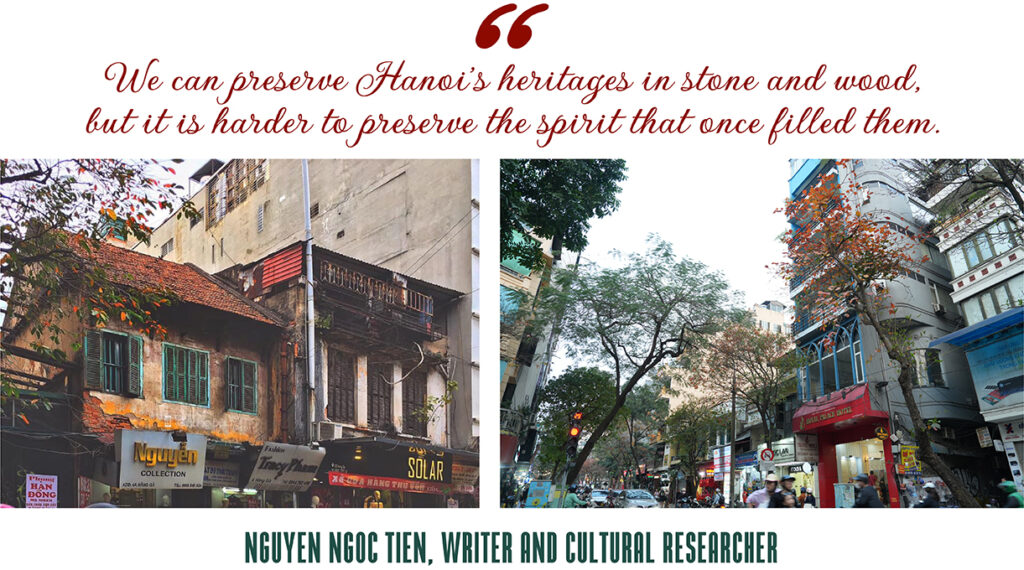
“Economic and social development needs to go hand in hand with preserving good cultural values. This is an essential need for Hanoi’s Old Quarter,” he said.
“In modern times, the old quarter has gradually become a part of a bustling, hurried lifestyle and many cultural beauties are being lost. Traditional crafts are disappearing, replaced by generic shops and imported goods. Street names no longer reflect the trades they once represented,” he added.
Recognizing this, the People’s Committee of Hanoi and Hoan Kiem Ward have launched initiatives to preserve, restore and promote the cultural value of the Old Quarter. Many historic sites have been restored and repurposed into vibrant cultural spaces- venues for exhibitions, workshops and art performances that reconnect the present with the past.
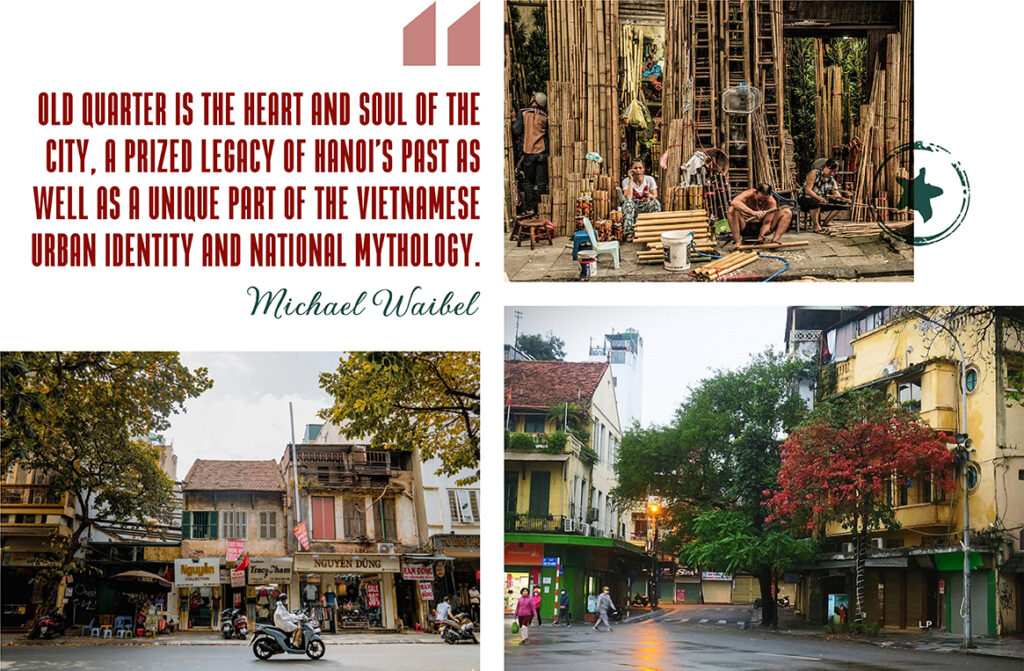
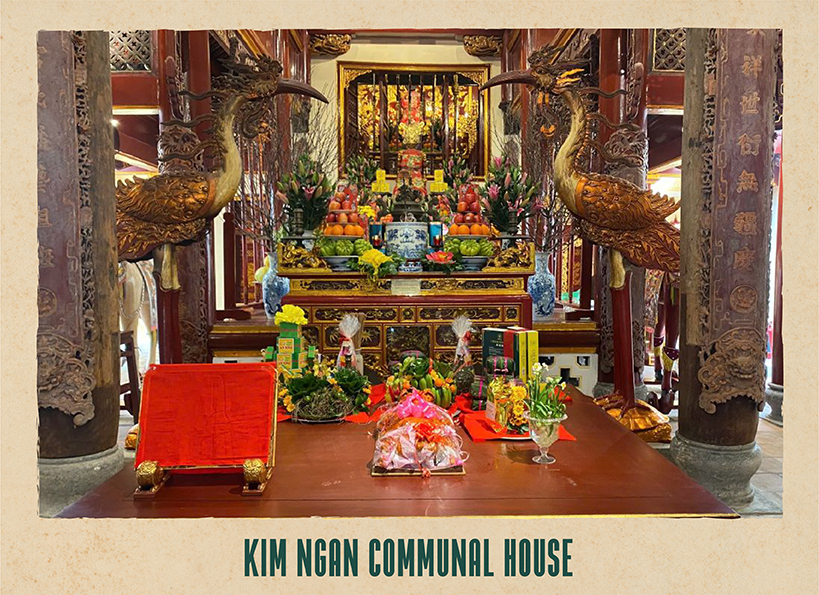
Among these are the Heritage House at 87 Ma May, Kim Ngan Communal House, the Old House at 42 Hang Bac, the Hanoi Old Quarter Cultural Exchange Center at 50 Dao Duy Tu, Quan De Temple at 28 Hang Buom and Dong Lac Communal House at 38 Hang Dao. Each site tells a story of Hanoi’s enduring craftsmanship and its ever-evolving cultural fabric.
For visitors wandering through these narrow streets today, every cobblestone and tiled roof whispers of the past. Once, boats docked along these very paths, unloading goods in the riverside markets of ancient Thang Long – Ke Cho.
Time may reshape the city’s face, but the soul of the “Hang” streets with their craft, charm and quiet pride remains enduring.