Rare historical images of Vietnam’s ancient Huong examination bring to life a fading Confucian tradition, offering a glimpse into the country’s rich scholarly past.
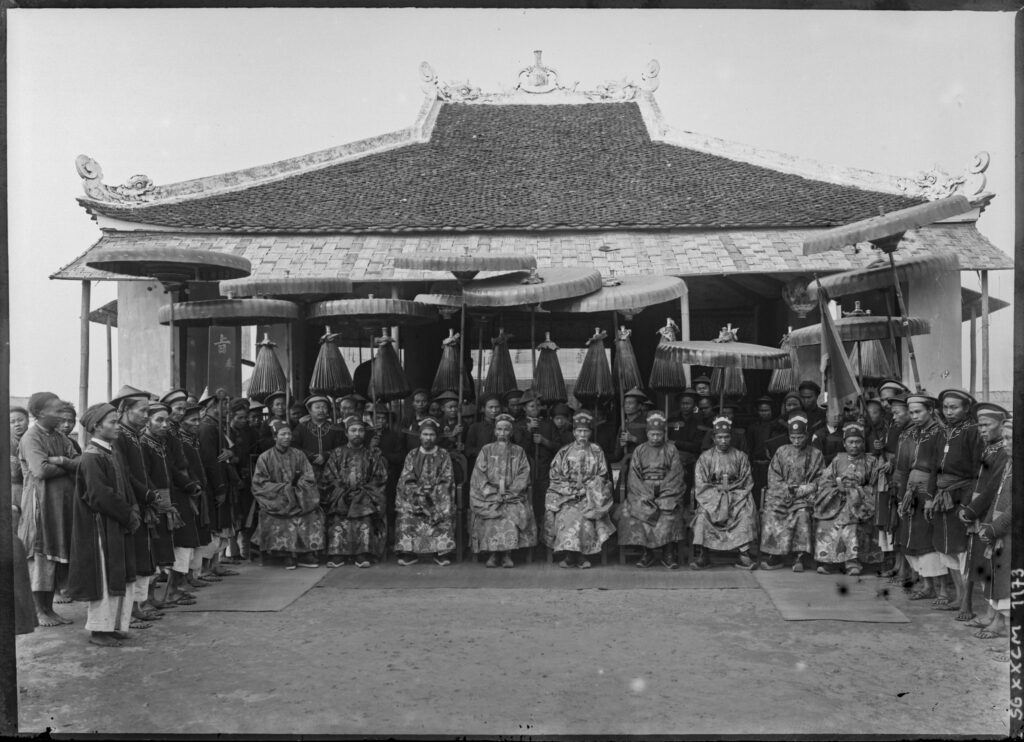
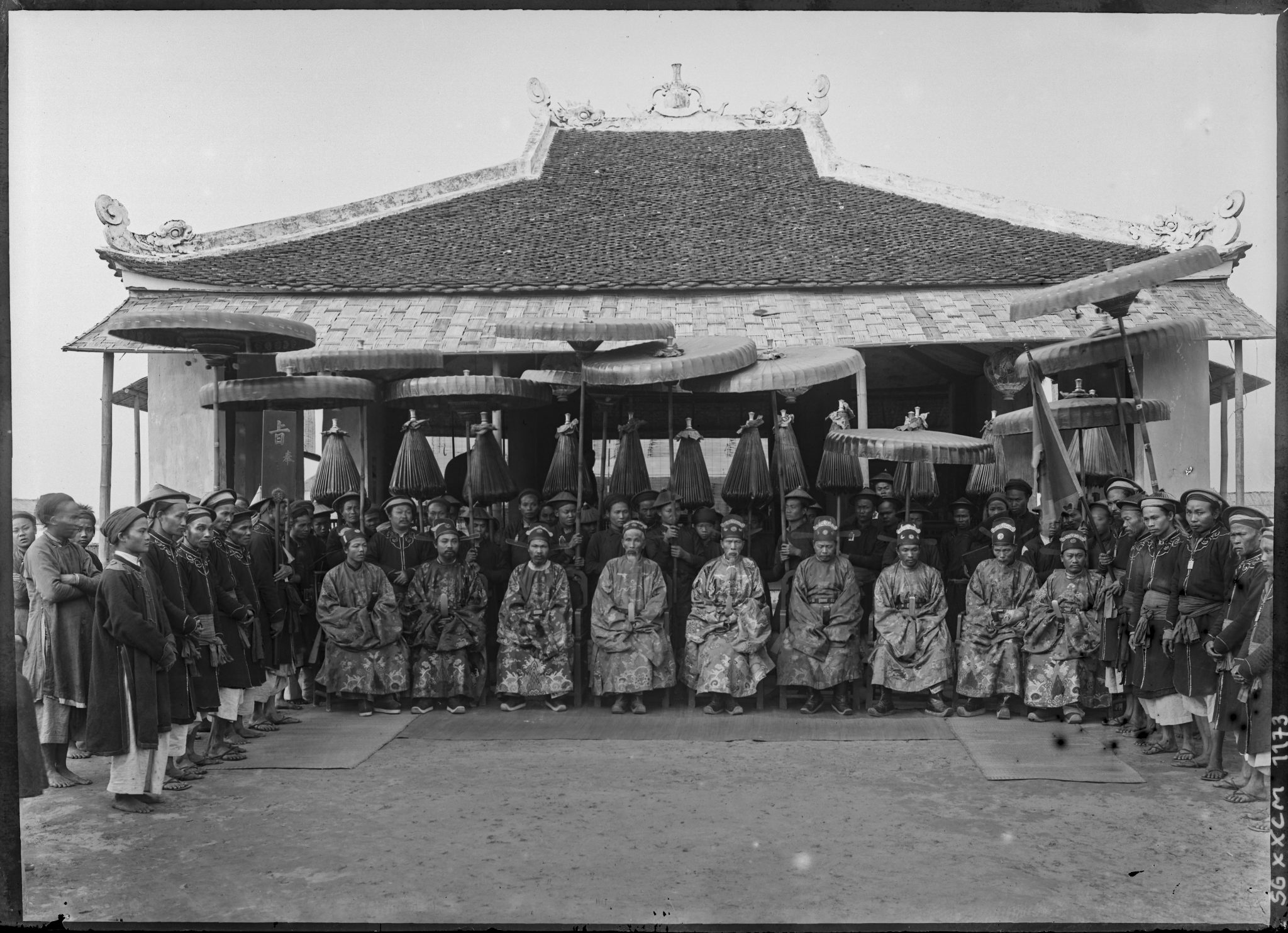
The judges of Huong examination in December 1897 in Nam Dinh Province (Now Ninh Binh)
At Photo Hanoi’25, visitors will have the unique opportunity to step back in time through a series of photographs by André Salles, documenting the 1897 Huong (regional) examination in Nam Dinh.
The exhibition entitled “Triennial examination at the end of the 19th century” will take place throughout November at Hanoi’s iconic Temple of Literature.
The Huong examination was a key element of the Confucian education system, designed to identify talented scholars for higher examinations and positions in the royal court. By 1897, however, these centuries-old traditions were entering their final chapter as the influence of Confucian learning gradually gave way to modern education and the rise of the romanized Quoc ngu script.
The rare images captured by Salles offer a vivid glimpse into this transitional period. His photographs portray the solemn yet lively atmosphere of the examination grounds- candidates working under small bamboo shelters, ink and paper at hand, each focused on the hope of achieving scholarly distinction.
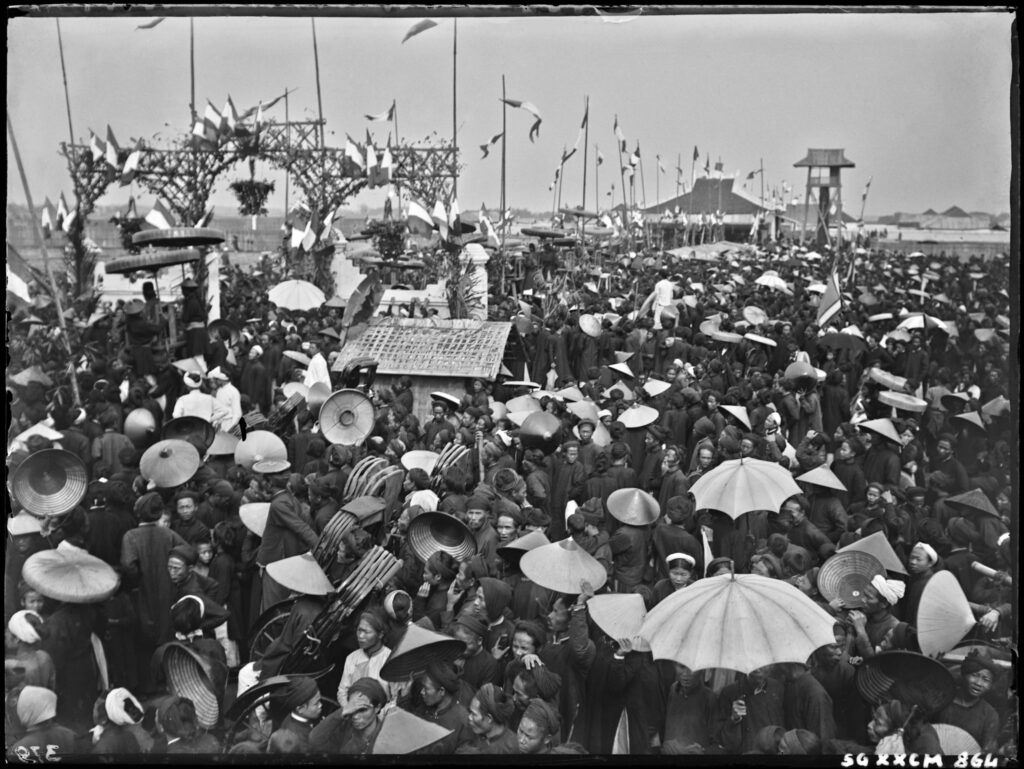
The bustling scene outside the exam hall
Firmin-André Salles (1860- 1929) was a French photographer and explorer active in Vietnam, Laos, and Cambodia between 1896 and 1898. Using the dry-plate photographic process, he produced remarkably sharp and detailed images that remain among the most valuable visual records of late 19th-century Indochina. His work provides an exceptional look into the landscapes, people and customs of the time.
To deepen public understanding, the exhibition’s organizers have collaborated with Vietnamese cultural researchers to provide historical context about the Huong examination and the individuals depicted in these photographs. More than a display of rare images, the exhibition invites reflection on the role of photography in documenting history and preserving cultural memory, while also shedding light on Vietnam’s traditional education system under the Nguyen Dynasty.
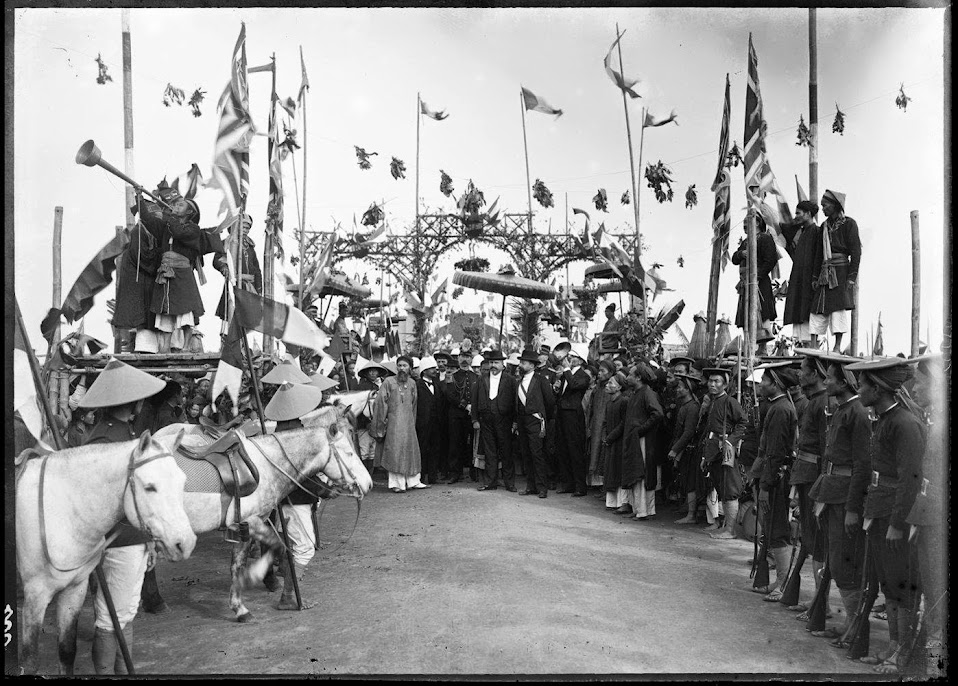
Ceremony announcing the successful candidates of the Huong examination, Nam Dinh, 1897
According to cultural researcher Thanh Dung from the Hue Monuments Conservation Center, the Nguyen Dynasty’s examination system consisted of three main levels: the regional examination (Huong), the national examination (Hoi) and the royal examination (Dinh).
The regional examination was held locally, with several provinces sitting for the same test at one examination school. It aimed to select capable scholars to advance to the higher exams. In the North, the Huong exam usually took place around October, while in the Central and Southern regions, it was held between March and July.
Examinations began before dawn and lasted until evening. Candidates were required to be present by 1AM to have their names called, and by 5AM all were inside the examination grounds. The test ended around 5PM, with papers submitted before 7PM. Each candidate brought personal essentials of a small tent, mat, bedding, inkstone, brushes, paper, knives, scissors and food to endure the long, demanding day.
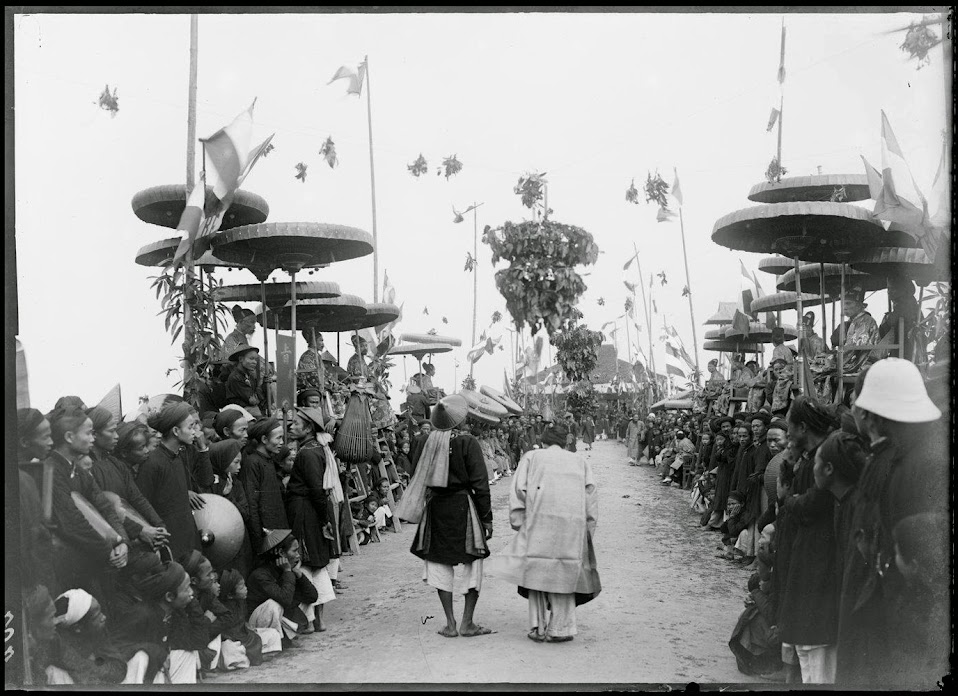
Successful candidates parade past the panel of judges after the Huong examination, Nam Dinh, 1897.
A regional examination often comprised three or four rounds. The first tested the Tu Thu or Four Books and Ngu Kinh or Five Classics of Confucianism; the second involved drafting administrative documents such as edicts and petitions; the third assessed poetry and prose; and the fourth required the composition of literary essays.
Those who passed three rounds received the title of Bachelor. Those who passed all four rounds were specially honored – presented with royal robes and crowns, invited to a banquet and allowed to return home to pay respects to their ancestors. Many continued their studies to compete in the national and royal examinations, aspiring to higher academic titles and government positions.
Through the lens of André Salles, the exhibition offers more than a glimpse into a bygone era. It is a tribute to Vietnam’s enduring reverence for learning and intellectual pursuit, values that continue to shape the nation’s cultural identity today.
By Jenna Duong