In the heart of Hanoi’s bustling Old Quarter stands a little-known but deeply symbolic place of worship: Fire God Temple, the only one of its kind in Vietnam.
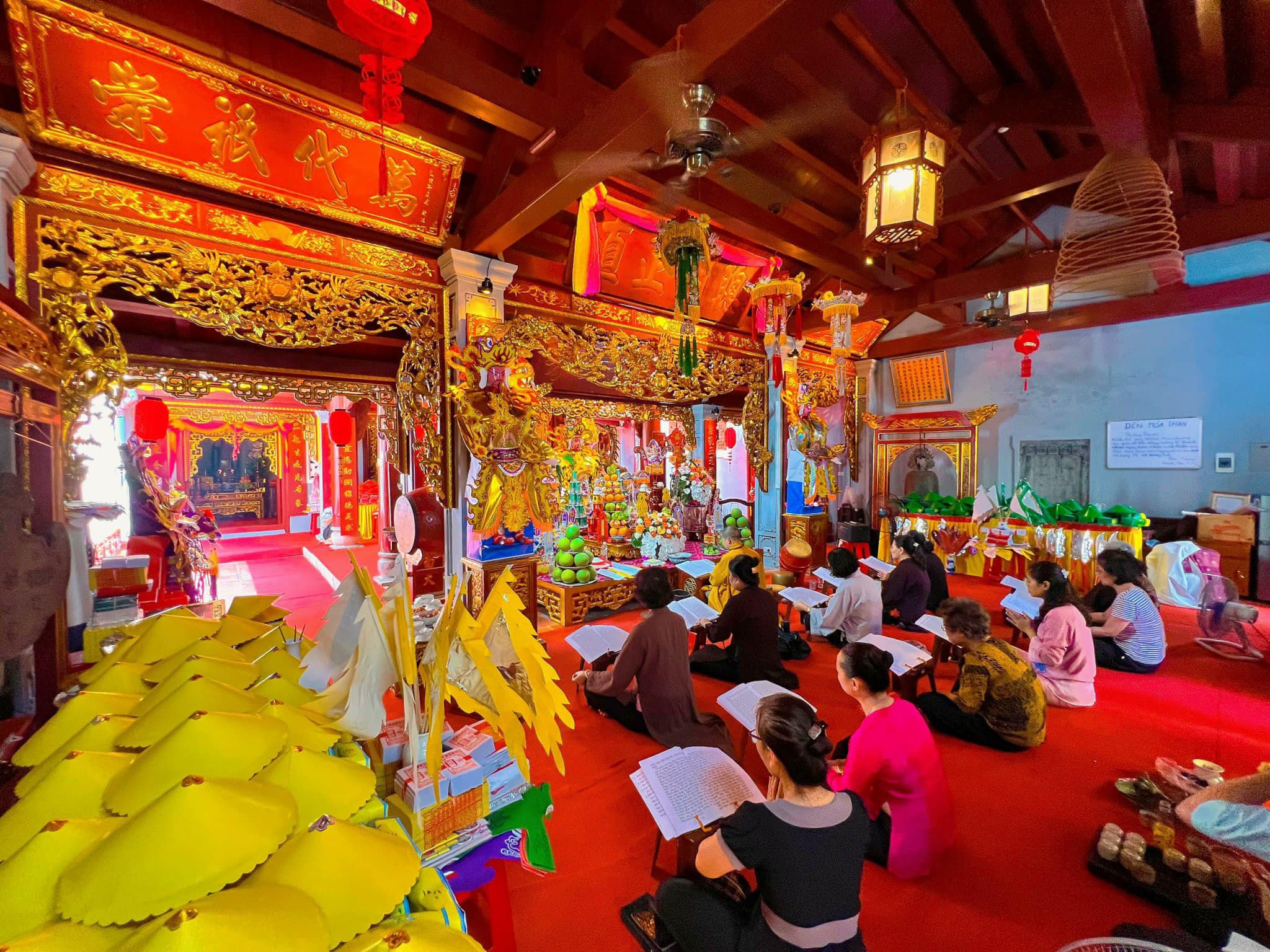
The sacred sanctuary of the Fire God Temple in Hanoi. Photo courtesy of the temple
Tucked away at 30 Hang Dieu Street in Hoan Kiem Ward just a short walk from Hanoi’s iconic Hoan Kiem Lake, the Fire God Temple is a rare relic of folk belief where the flame is revered as divine. Let’s join The Hanoi Department of Tourism to discover the unique relic site in Hanoi.
Legend rooted in folk belief
According to legend, the Fire God Temple is dedicated to Marshal Glorious Horse, a captivating figure in Vietnamese spiritual tradition whose story is deeply rooted in Buddhist, Taoist, and Confucian philosophies.
As the story goes, the Fire God was once no more than a humble temple lamp. After years of absorbing Dharma teachings and sutra chanting, it attained enlightenment and was reborn into the Phung family as Quang Hoa Ma Nguyen Suy. Through unwavering devotion and spiritual practice, he ultimately ascended to heaven, where he now serves the Jade Emperor as a celestial guardian of fire.
Inside the temple, his statue sits at the center of the main sanctuary, flanked by Thousand-Mile Eye, who sees great distances, and Fair-Wind Ear, who hears everything – mythological figures meant to emphasize the deity’s omniscient nature.
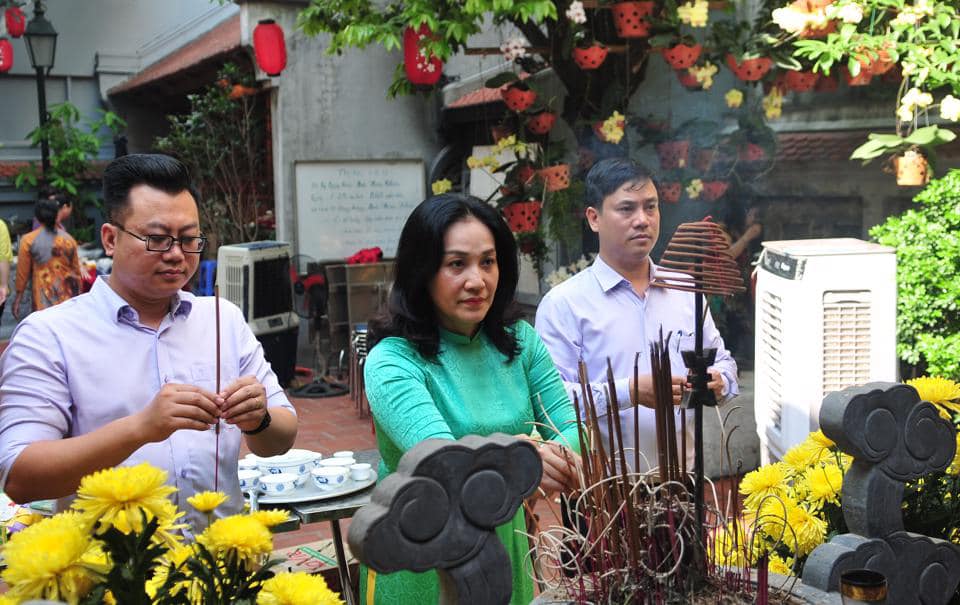
The sacred temple nestled in the heart of Hanoi’s Old Quarter is receiving renewed attention and restoration from local authorities.
Born from flames
The Fire God Temple was originally built during the early Nguyen Dynasty (1802-1945), at a time when the area outside the East Gate of the ancient Hanoi Citadel was prone to devastating fires. The houses then were primarily made of bamboo and thatch that offered little resistance to flame.
In 1828, a fire destroyed over 200 homes, followed by another that consumed 1,420 dwellings in 27 wards later that same year. A third inferno, nine years later, burned more than 1,400 homes. In response, the court of Emperor Minh Mang commissioned the construction of a temple in 1838, dedicated to the Fire God, seeking divine protection for the local community.
At first, the temple was no more than a simple shrine, where a bronze statue and three ceremonial bells were kept- the bells traditionally rung to invoke the deity’s protection whenever a fire occurred. These original relics are still preserved today.
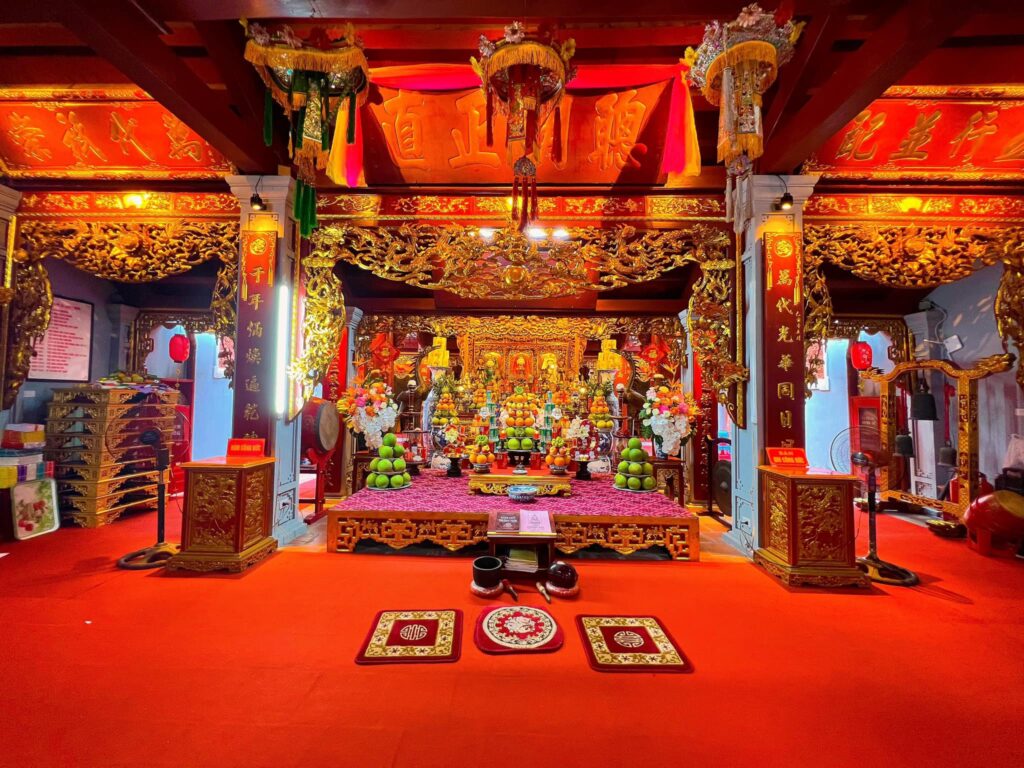
Hanoi’s sole temple devoted to the worship of the Fire God
Over the centuries, the temple received royal decrees of recognition and underwent numerous restorations, adapting to the changing times while preserving its spiritual core.
Trinh Van Hung, Deputy Head of the Temple’s Management Subcommittee, has lived on Hang Dieu Street all his life, just opposite the temple. “When I was young, the entrance to the temple was just a narrow alley, barely one meter wide,” he recalls. “Residents used to gather in the small courtyard to boil square sticky rice cakes during Tet Holiday.”
As Hanoi grew denser, nearby homes gradually encroached on the temple grounds, reducing it to a modest space for spiritual practice. It wasn’t until 2019 that major renovations began, with seven households relocated to restore the original footprint of the relic. Earlier this year, the temple’s gate was rebuilt, and the entrance expanded, giving the site a renewed sense of dignity and accessibility.
Despite the upgrades, the temple retains its traditional northern Vietnamese architecture with two horizontal houses, an open courtyard, and intricate wood carvings.
Unique venue in spiritual life
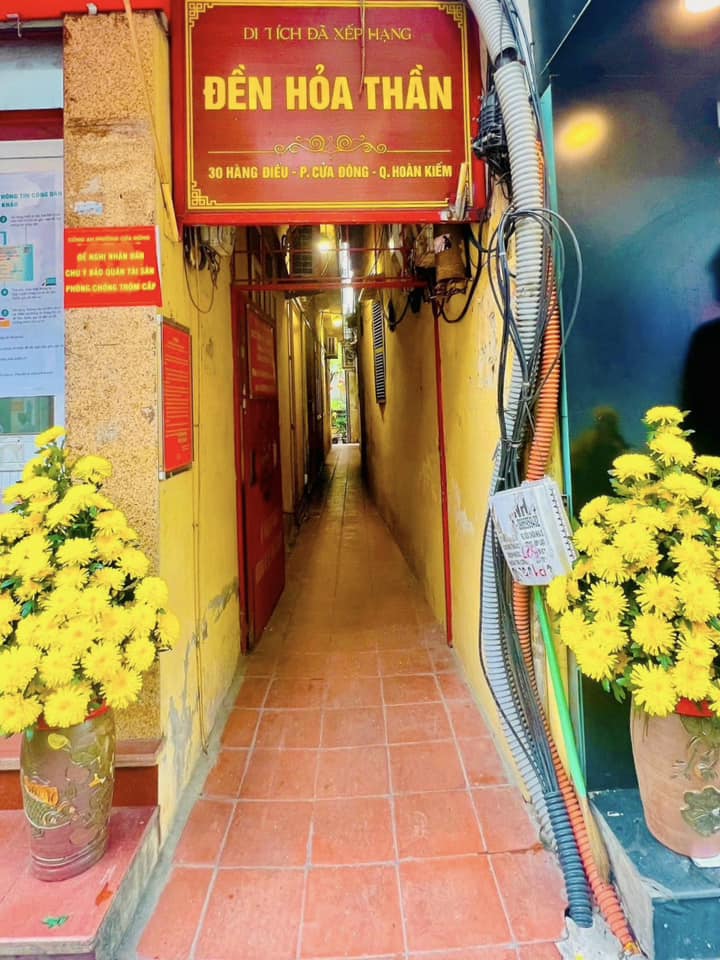
A narrow lane winds its way to the Fire God Temple
While it is primarily a sanctuary for the Fire God, the temple also features a front hall honoring the Mother Goddesses, reflecting the syncretic nature of Vietnamese spirituality. The courtyard includes a memorial stele for heroic martyrs, and the spirits of two late religious mediums, who once tended to the temple, are also venerated.
Hung, who has served as the temple’s flametender for decades, begins his daily rituals at dawn. “At 5:30, I come to prepare tea, burn incense, clean the altar,” he shares. “Even if no one visits that day, the space must still be kept solemn.”
Another devoted caretaker is Le Thi Xe, head of the Vietnam Fatherland Front Work Committee in the area, who helps manage and maintain the temple. “Every day, I clean the space, replace the flowers, and welcome guests,” she says. “Many return to give thanks after their prayers are answered.”
However, Xe believes more should be done to document the temple’s history. “It’s such an old and meaningful site, yet there’s very little official information available. Foreign visitors often have to use translation apps just to learn what this place is about.”
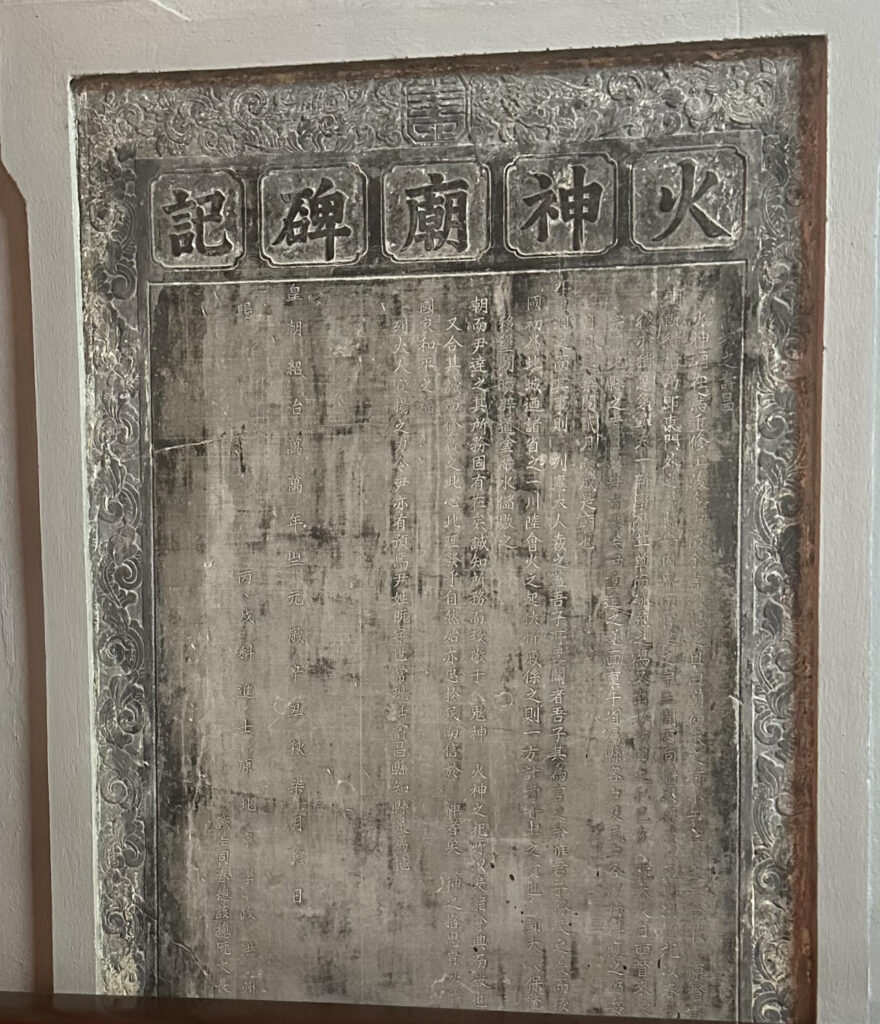
An ancient stone stele inscribed with the historical record of the Fire God Temple
Each year, the temple holds two main festivals on the 28th day of the third and ninth lunar months, marking the Fire God’s birth and ascension. These once included folk games and community celebrations. Now, with limited space, the focus is on solemn rituals co-organized with the local government and entry remains free for all.
The majority of visitors come to pray for peace, protection from fire, and prosperity in business. But Hung reminds them that expensive offerings aren’t necessary: “What matters most is sincerity and keeping the worship space clean and respectful.”
In a city where centuries-old temples often sit beside modern storefronts, the Fire God Temple stands out not for its grandeur, but for its uniqueness. For curious travelers eager to go beyond Hanoi’s well-trodden paths, a visit to this humble temple offers a rare window into the spiritual heart of the capital city of Vietnam.
By Jenna Duong