Hanoi’s beloved specialties are beautifully brought to life, enchanting visitors at the open-air museum on Pearl Island, nestled in the picturesque Ngu Xa area of Truc Bach Ward, Ba Dinh District.
To enrich Hanoi’s tourism offerings, the Hanoi Department of Tourism has recently unveiled Tram Line No. 6, featuring four uniquely themed tram cars that transport visitors back to the subsidy era. These trams, named Bếp – Chạn – Mâm (Kitchen – Cupboard – Tray), Thóc – Lúa – Gạo (Grain – Paddy – Rice), Bún – Phở – Sợi (Vermicelli – Rice Noodles – Wheat Noodles), and Cafe – Cà phê – Coffee, each serve as a miniature museum. Inside, visitors can discover carefully curated displays, with each tram reflecting the essence of its theme.
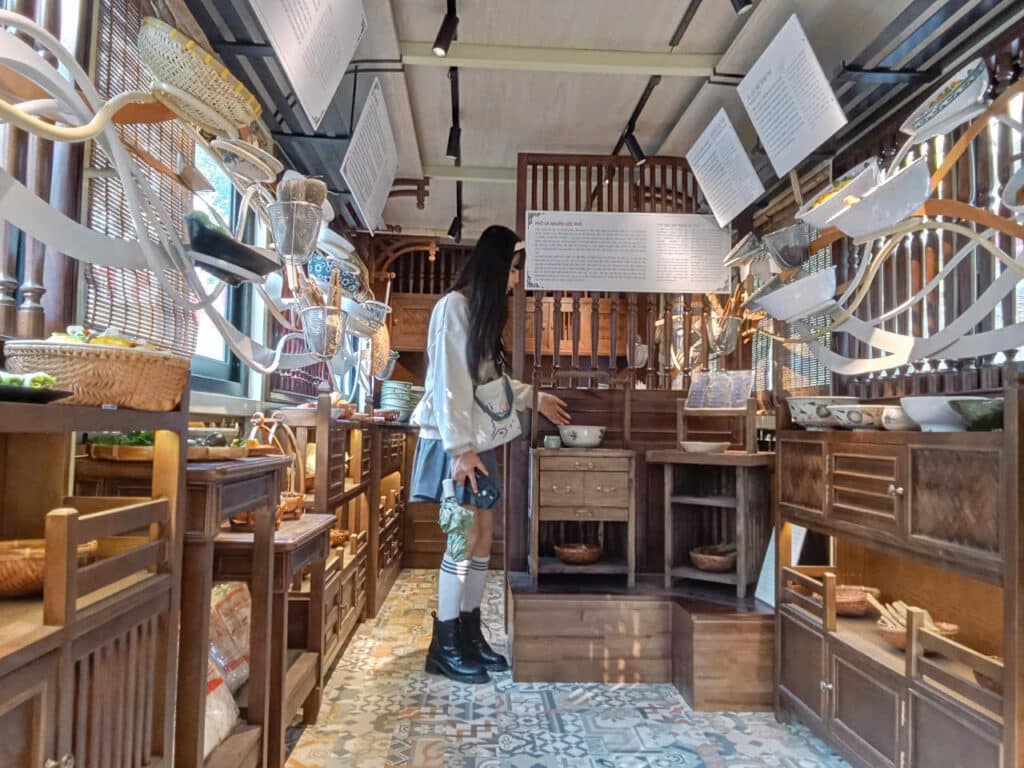
The opening of Tram Line No. 6 was the highlight of the ‘Truc Bach Night’, a series of cultural events held from November 29 to December 1. The outdoor museum is now open to the public, inviting everyone to experience its unique offerings.
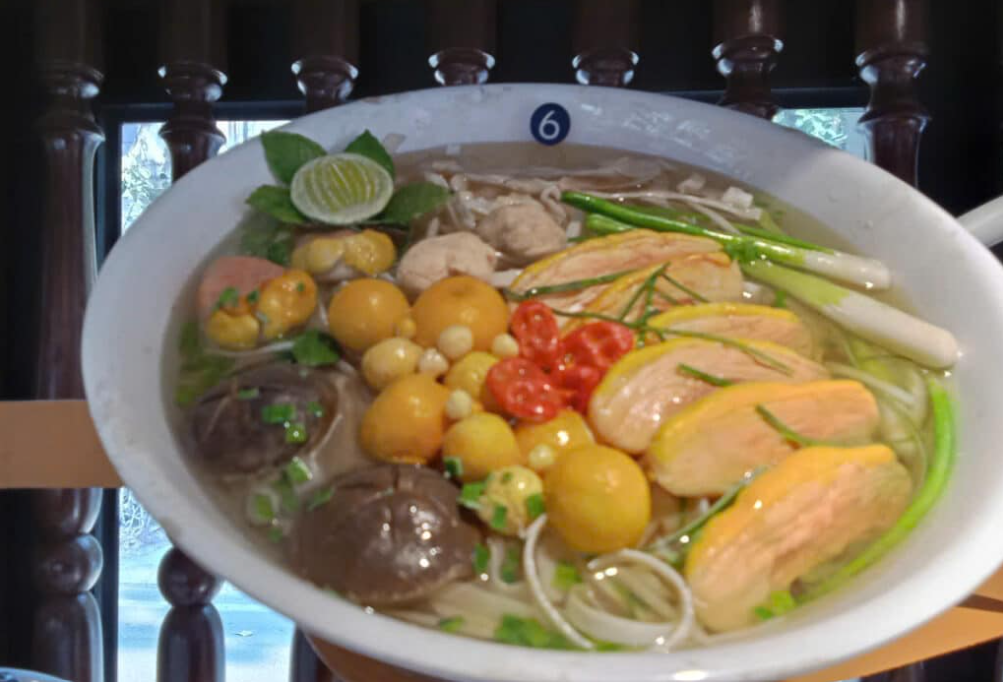
Now, let’s take a closer look at the delicious dishes served in the ‘Vermicelli – Rice Noodles – Wheat Noodles’ tram car
Mì vằn thắn or Wonton Noodle
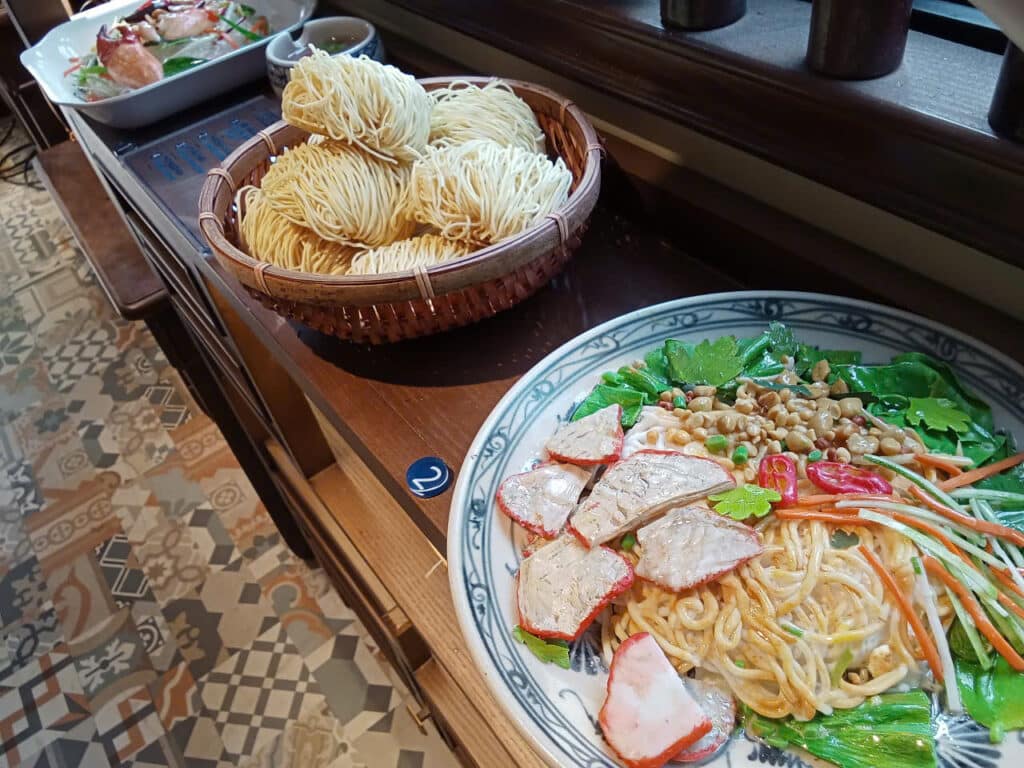
Originally from China, this dish made its way to Hanoi around the early 20th century and quickly captured the hearts of local food lovers. The main ingredients are noodles made from flour and eggs, with additions like tender pork belly, fresh shrimp, and boiled eggs, enriching the dish with delightful flavors and nutrition. The dish is served with a fragrant, sweet broth made from simmered pork bones, topped with fresh chives to enhance the flavor and presentation.
Bún đậu mắm tôm or rice noodle with fried tofu and shrimp paste
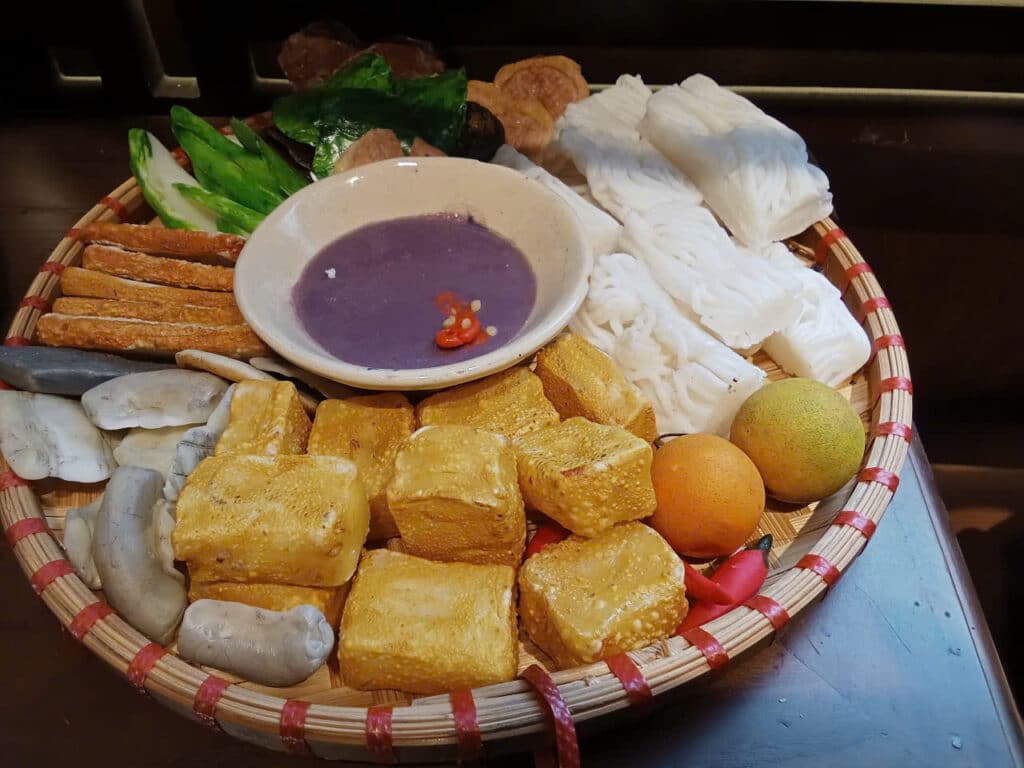
The dish of Bún đậu mắm tôm is considered a street food dish of Hanoi and isn’t often served in a restaurant. Unlike the aforementioned dishes, where the rice noodles are long and quite thin, the kind used for Bún đậu mắm tôm is shaped like a patty and usually cut into bite-sized triangular pieces.
The dipping sauce – mắm tôm or shrimp paste – is the most special part about this dish. It has a characteristically pungent smell that might scare away the chicken-hearted diners.
Traditionally, this dish consists only of noodles, fermented shrimp paste, and deep-fried tofu. But nowadays, you’ll find many toppings such as boiled pig leg or pork belly slices, pork intestines, green rice pork nuggets, and fried spring rolls, all of which go great with the dipping sauce.
Bún ốc lạnh or or Cold snail vermicelli soup
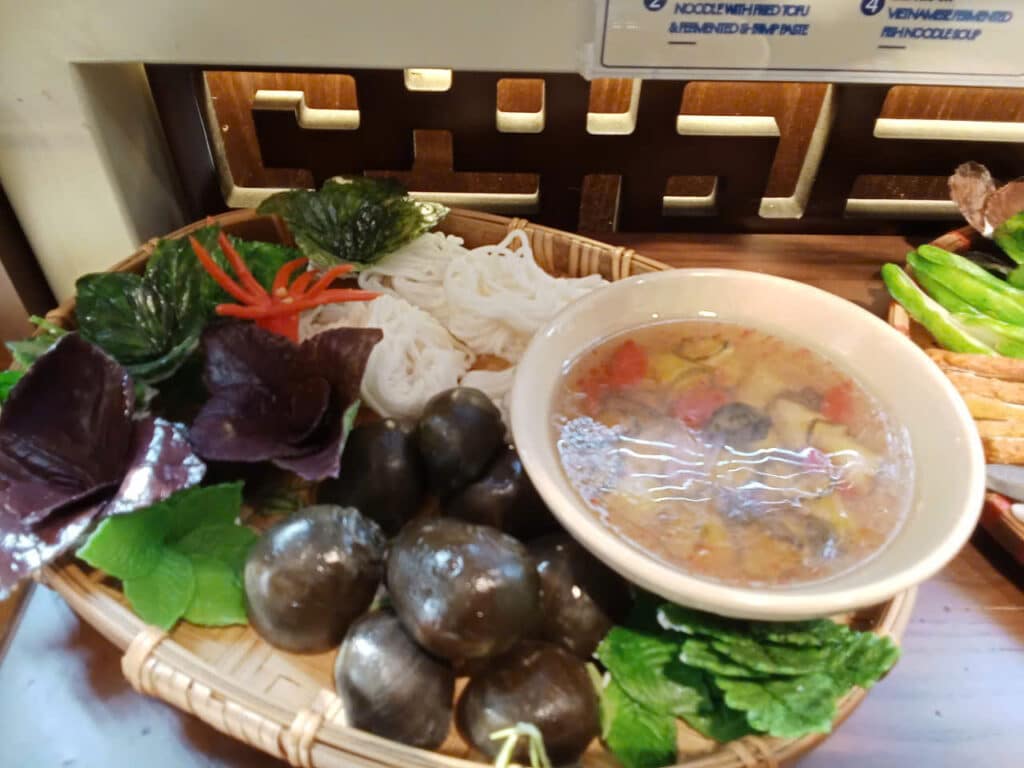
Cold snail vermicelli soup is a specialty of Hanoi. In his book Miếng Ngon Hà Nội or Delicacies of Hanoi, the late author Vu Bang praised bún ốc or snail vermicelli soup: “It is a snack that reaches the pinnacle of Hanoi’s art of fine dining.”
Most diners prefer cold snail vermicelli soup in the summer for its cool, delicate, non-greasy taste. Unlike today’s bún ốc bowls, which are filled with snails, beef, pork bologna, fried fish or tofu, or even duck embryos, a bowl of bún ốc lạnh is still simple: snails, a few pieces of vermicelli dipped in broth with a little cashew-colored oil, and chili.
The highlight, which gives the broth its unique flavor, is the thickened vinegar made from premium sticky rice, the taste of which varies from vendor to vendor. Whether or not you can eat spicy food or not, you should add a little boiled chili – not the shrimp paste that often accompanies hot snail vermicelli soup. It gives the bowl an attractive reddish-brown color, while its heat accentuates the sour, fragrant broth.
Unlike other vermicelli dishes, bún ốc lạnh isn’t served with herbs. According to Hanoi cooks and cultural scholars, snails are naturally cold, so if eaten cold with raw vegetables, they will be too cold for the stomach. On the other hand, adding simmered chilles creates a yin-yang balance for the dish, which shows the finesse of ancient Hanoi cuisine.
Phở bò or beef noodle soup
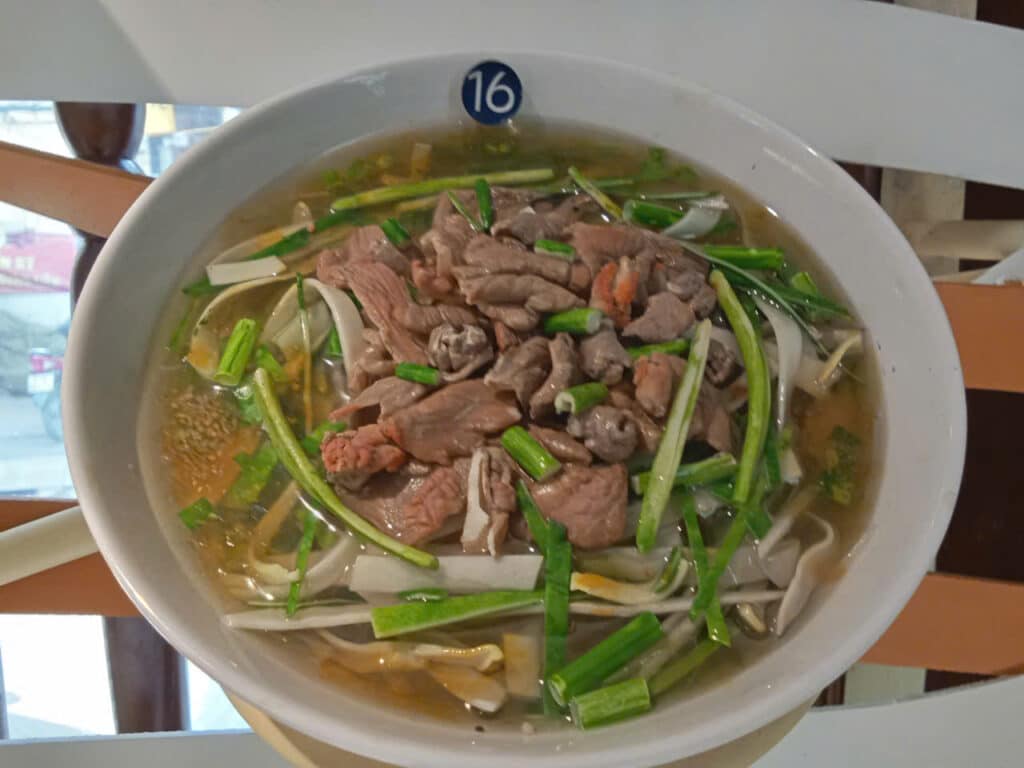
Considered the national dish of Vietnam, phở bò has a series of variations such as phở bò tái ( phở soup with medium-rare sliced steak), phở chín (soup with steamed lean beef), phở nạm (phở soup with steamed half-lean half-fatty beef), phở gàu bò (phở soup with steamed fatty beef) or phở sốt vang (Vietnamese version of bordelaise sauce with beef tendon), among others.
No one knows for sure when phở bò was invented, but the dish was already very popular in Hanoi during the 1940s. For Hanoians, the dish is not only a portion of food that helps to fill up the stomach but also a cultural habit that is rooted in their minds. They might eat dumplings, sponge cake, or other foods from time to time, but they could eat at least one bowl of phở bò more than once or twice a week throughout their lives.
Phở gà or Noodle soup with chicken
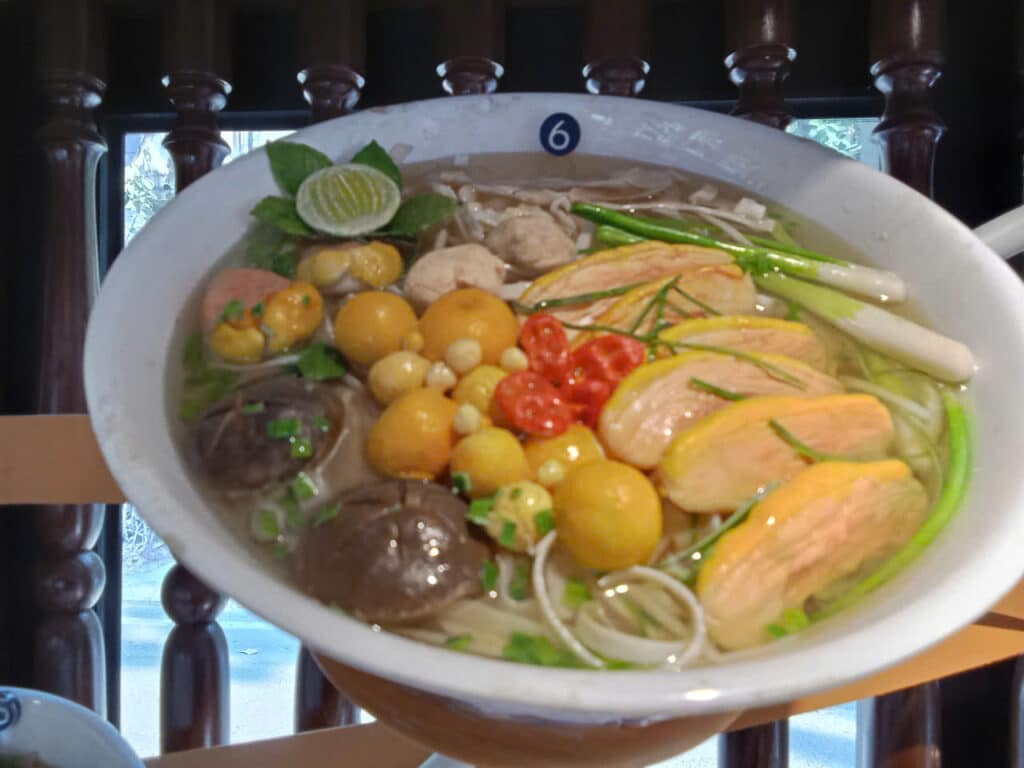
This dish is a variation of traditional beef phở, but instead of beef, it features chicken. The broth for this chicken phở is made by simmering a combination of chicken and pork bones, which distinguishes it from the beef phở broth, which is traditionally made with beef bones.
The special f dish, “whose aroma alone is enough to drive winter from the soul” begins with the steaming of beef shinbones in a huge cauldron until the gelatinous consommé is concentrated, which takes about 24 hours. It is then spiced up with a dedicated balance of herbs, spices, and salts.
When you place your order, the cook adds slices of chicken to a bowl of the broth, on top of rice noodles, then sprinkles it all with sliced onion, chopped green onion, and fresh coriander.
Phở cuốn or Rolled Phở
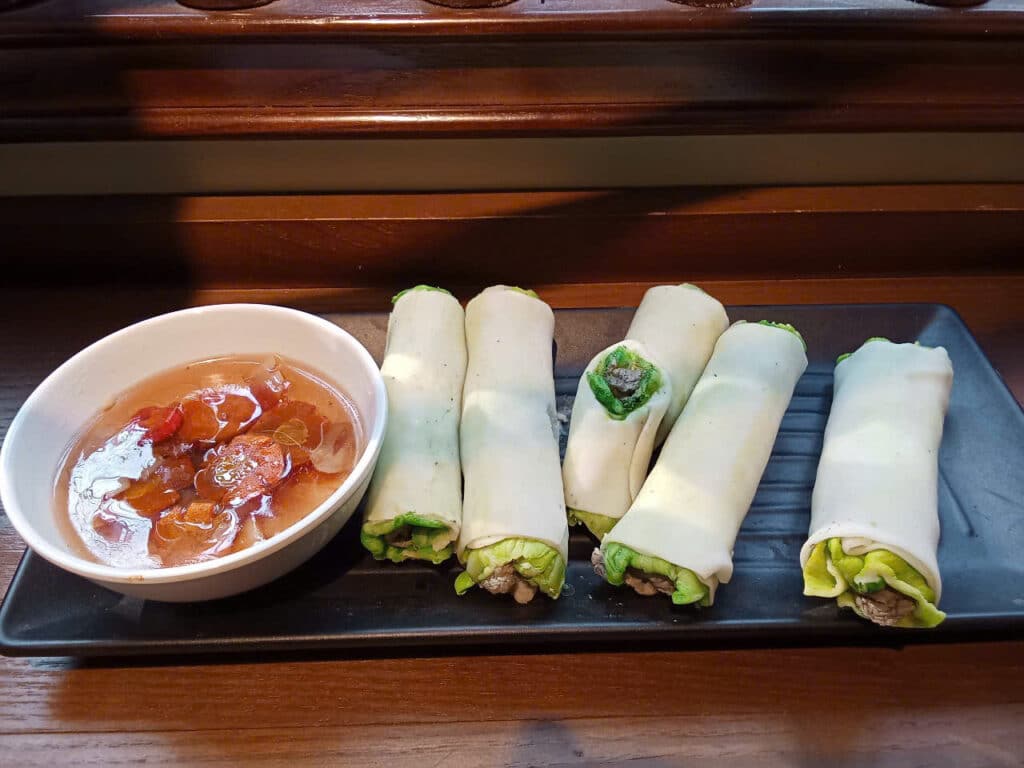
Ngu Xa used to be a craft village in the old time, popular for copper casting since the 15th century. But now the area is known for phở cuốn. The inventor of phở cuốn is Vu Thi Chinh, the owner of Chinh Thang restaurant. The cook tried rolling up phở sheets with beef and herbs, served with fish sauce, the typical sauce of Vietnam. Surprisingly, her customers liked it a lot. Since then, it has been widely sold in the Phở restaurants in the area.
Phở cuốn is similar to Phở in terms of ingredients. But it differs in the way that instead of a bowl of hot soup, Phở cuốn is served without soup, suitable for summer. For good Phở cuốn, the rice noodle sheet is required to be not only thin and soft for the best taste but also uneasy to be broken while rolling. The stuffing includes beef, which is cut into small slices and stirred with oil before being rolled with fresh herbs, especially coriander.
Phở chiên or Fried Phở
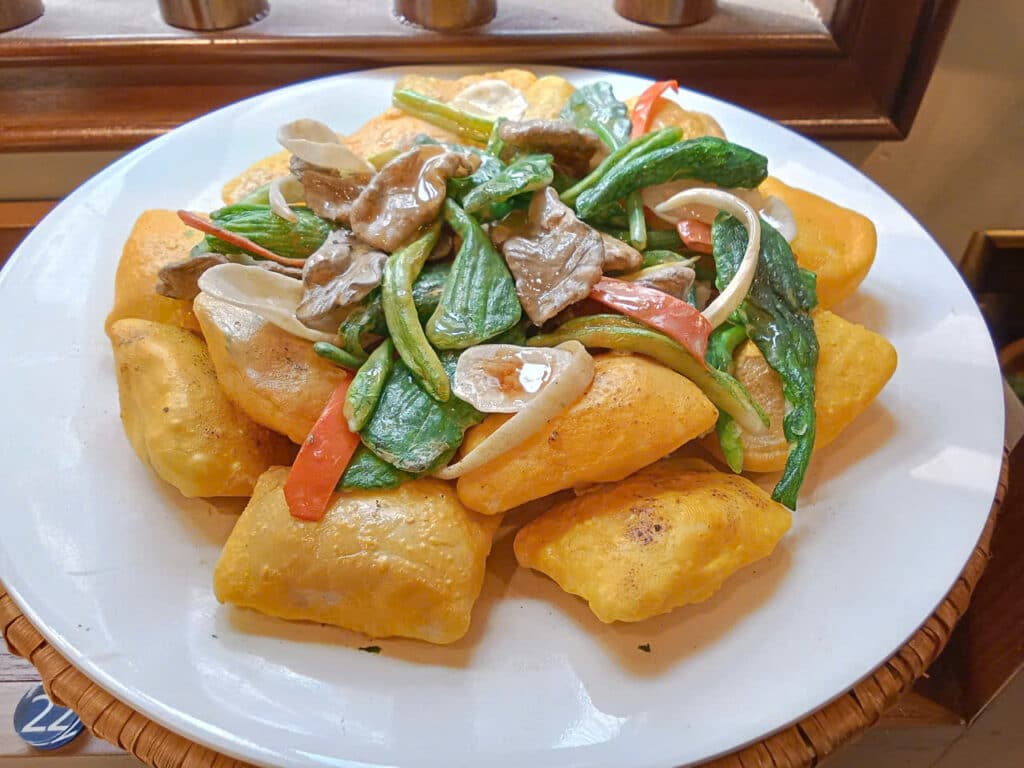
A delightful variation of traditional pho, Phở chiên (or deep-fried pho), is served without broth. The phở noodles are cut into square pieces, deep-fried to crispy perfection, and topped with savory stir-fried beef, vegetables, and tomatoes. Served hot, this dish invites diners to sprinkle a little pepper for an extra kick. The crispy texture of the fried phở, the sweetness of the stir-fried beef, and the freshness of the vegetables come together in perfect harmony, making each bite irresistible and leaving diners craving more.
Miến lươn or Crystal vermicelli soup with eel
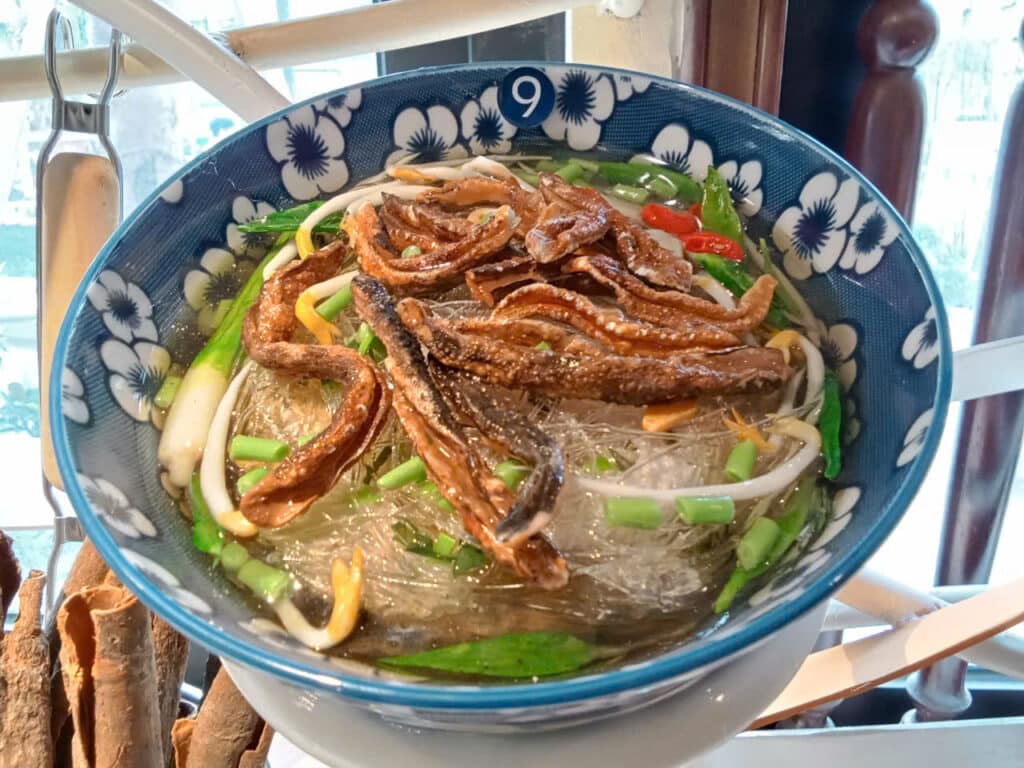
The dish was imported from Nghe An – a central province of Vietnam but quickly won the hearts of Hanoi diners. The simple dish consists of crystal vermicelli, ell, broth topped with green onion, Vietnamese coriander, bean sprouts and fried onion. There are two main varieties: eel noodle soup and mixed eel noodles, with customers able to choose between soft or crispy eel.
When a customer orders, the noodles and bean sprouts are blanched in the broth. The noodles are briefly blanched to retain their chewy texture, remaining soft without being sticky.
In addition to the soup and noodles, there are plenty offers of eel dishes, such as stir-fried noodles, eel porridge, and eel patties.
By Jenna Duong