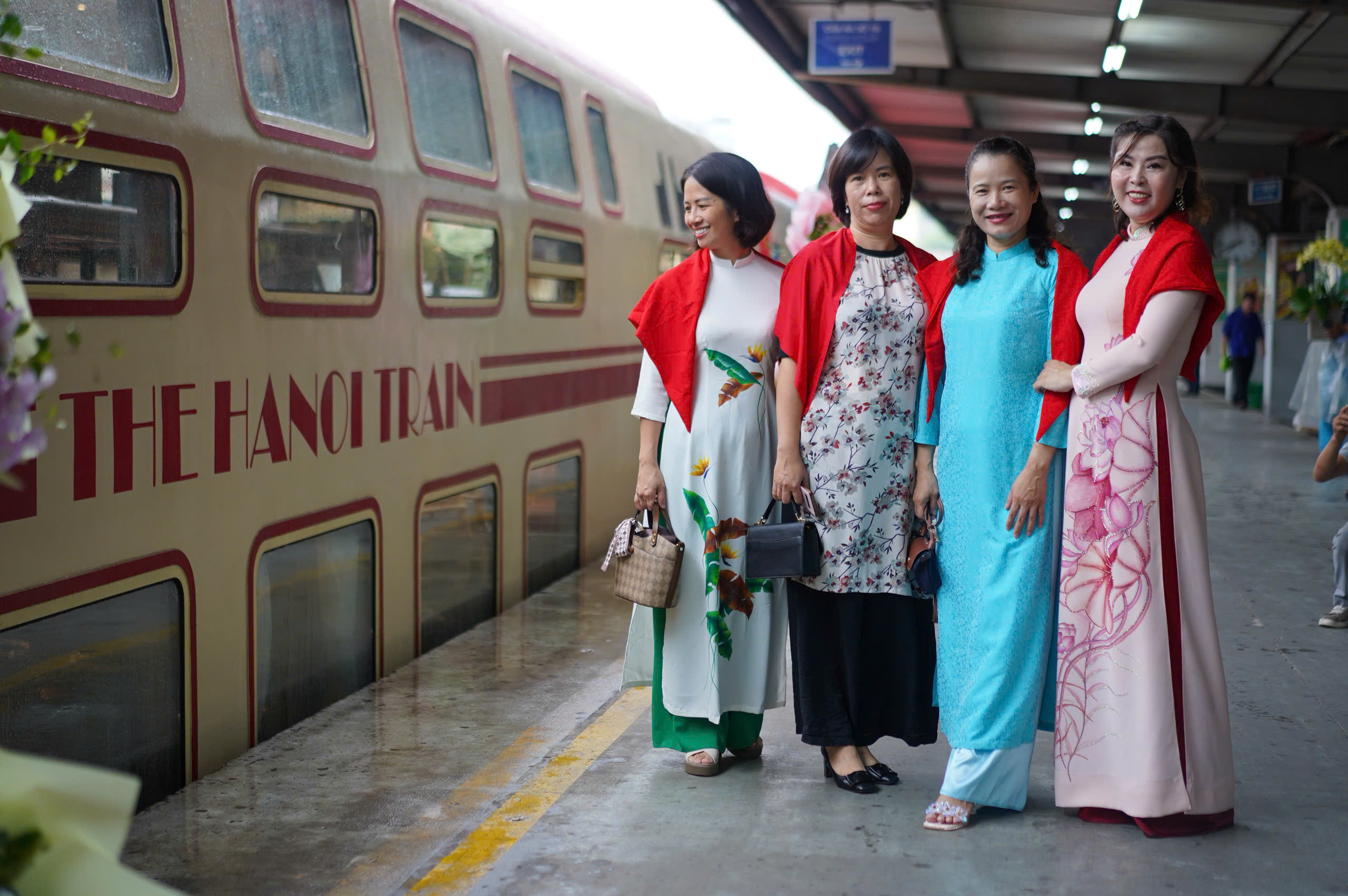
A new chapter in Hanoi’s tourism story begins with the launch of a unique train journey – one that elegantly weaves through time, culture and history, connecting the capital with its neighboring province of Bac Ninh in a way never seen before.

Visitors enthusiastically take part in “The Hanoi Train – Hanoi’s Five Gates.”
At 8 AM, “The Hanoi Train – Hanoi’s Five Gates” embarks on a journey to experience the capital from a refreshingly different perspective: peaceful, elevated and poetic. The early breezes drifting through the open window carry the delicate scent of morning dew mingled with the rich fragrance of milk flowers from the old quarters, slowly awakening the soft light of dawn.
Hanoi stirs to life with its familiar rhythm of a vibrant bustle in the city center and gentle calm on its suburban edges. From above, passengers can see the O Cho Dua intersection gradually filling with movement that commuters weaving through traffic, children heading to school, the pulse of a city stepping into a new day. As the train glides across the ancient Long Bien Bridge, the soft morning sunlight casts a golden hue over the mossy red-tiled rooftops along Hanoi’s legendary Red River.
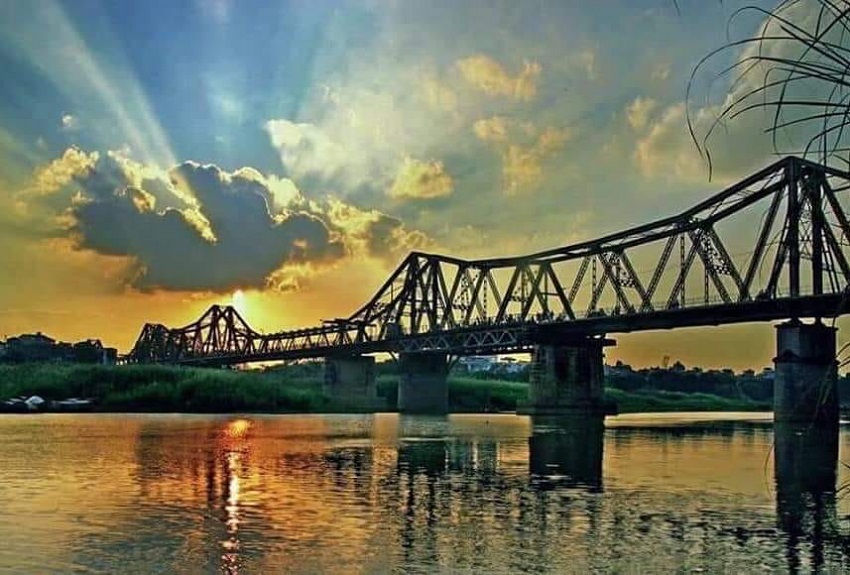
The Long Bien Bridge bathed in the dreamy glow of a Hanoi sunset. Photo: Chuyen Cua Ha Noi Group
Recently, a special double-decker train service titled “The Hanoi Train” or “Hanoi’s Five Gates” Train was officially launched by the Hanoi Department of Tourism in collaboration with BHL Trading, Service and Tourism JSC.
This innovative tourism product marks a step forward in the capital’s cultural tourism strategy, opening new pathways for heritage discovery and experiential travel.
A fresh journey on familiar tracks
Tao Duc Hiep, Chairman of BHL, the organizer of the tour, shares that “The Hanoi Train” offers three distinct trips daily. The morning journey departs Hanoi Railway Station at 8 AM, arriving in Tu Son, the northern province of Bac Ninh at 8.40 AM, and concludes around 11.30 AM.
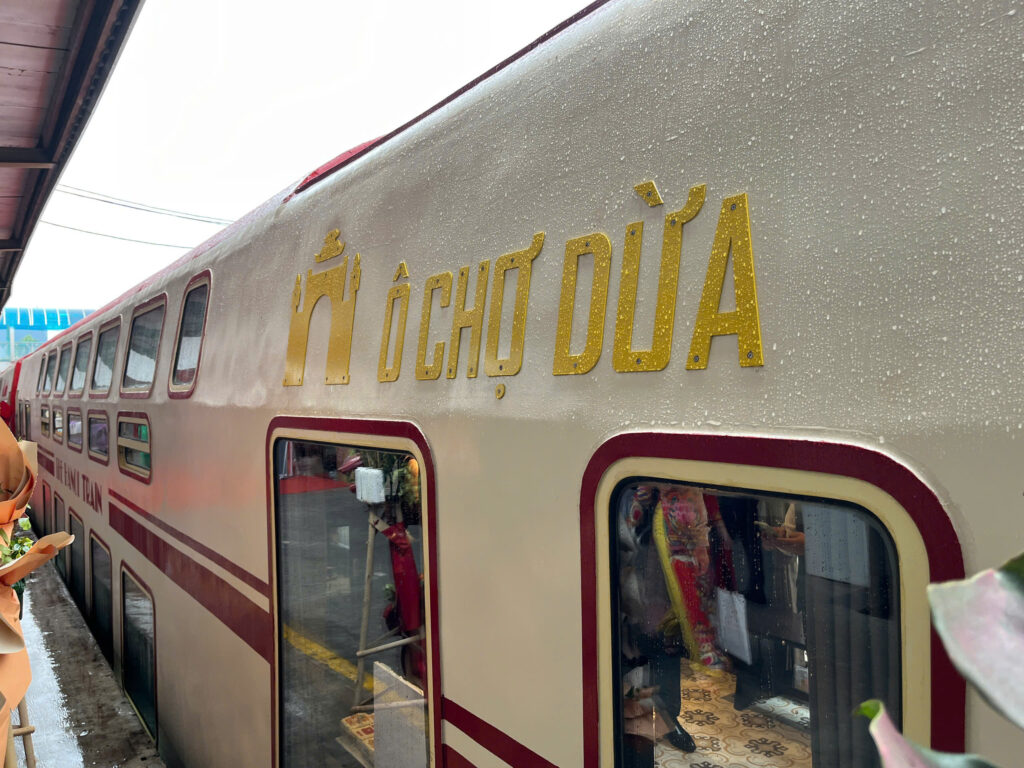
Train tours invite visitors to discover Hanoi in an unforgettable way.
An afternoon departure at 1.30 PM returns to the capital by 5 PM, while the evening experience, beginning at 8 PM, loops around Hanoi’s Ring Road 3, passing through Long Bien, Dong Anh, Phu Dien, Thang Long and Giap Bat stations, offering passengers a captivating view of Hanoi by night.
Ticket prices range between VND 550,000 (US$21) and VND750,000 ($29), depending on the carriage class. Each train car is thoughtfully designed with a unique interior theme inspired by distinct cultural elements or services.
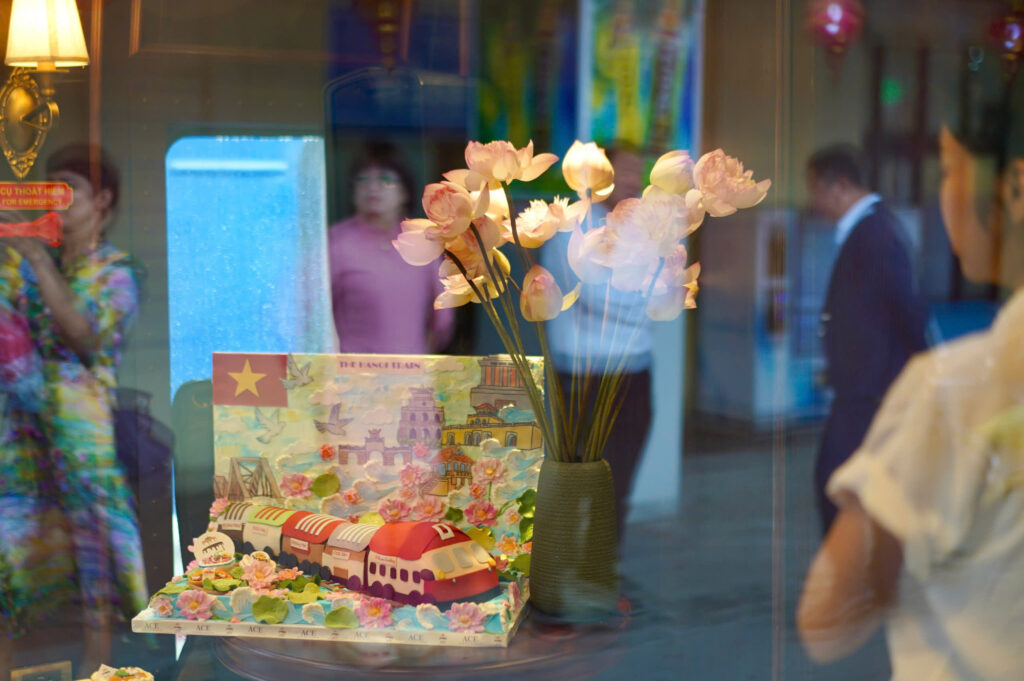
From the sweeping exterior curves to the intricate interior motifs, every inch of The Hanoi Train train reflects Hanoi’s thousand-year history.
“Whether it’s a single ticket or a full-carriage reservation, we try to deliver personalized, immersive experiences. Every carriage serves as a miniature cultural space, telling the story of Hanoi and Kinh Bac – the ancient northern region once closely linked with the capital of Thang Long,” said Hiep.
To enhance the experience for international guests, the train provides multilingual services in English, French and Chinese as an effort to improve accessibility, quality and the global image of Vietnamese tourism.
Following the footprints of history
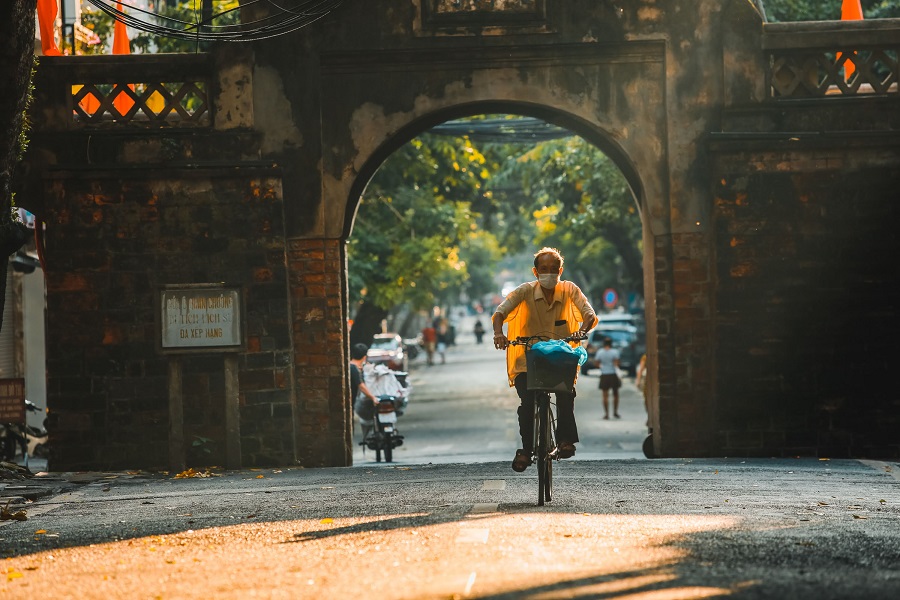
Quan Chuong Gate bathed in the soft hues of an autumn morning.
A defining feature of this journey is its cultural route “through the five gates of Hanoi”, a poetic nod to the former entrances of Thang Long Citadel. Each gate holds centuries of stories and symbolism tied to the capital’s identity.
The most iconic, Quan Chuong Gate (or Dong Ha Gate), remains the only intact gate of the old citadel. Located on Thanh Ha Street in Hoan Kiem Ward, it stands as a silent witness to the city’s resilience and bravery of Nguyen Dynasty soldiers during colonial resistance.
To the south, Cau Den Gate (Yen Ninh Gate) once linked Thang Long with its southern neighbors. Named after a small bridge spanning an amaranth field, its memory now lingers at the busy junction of Pho Hue and Dai Co Viet Streets.
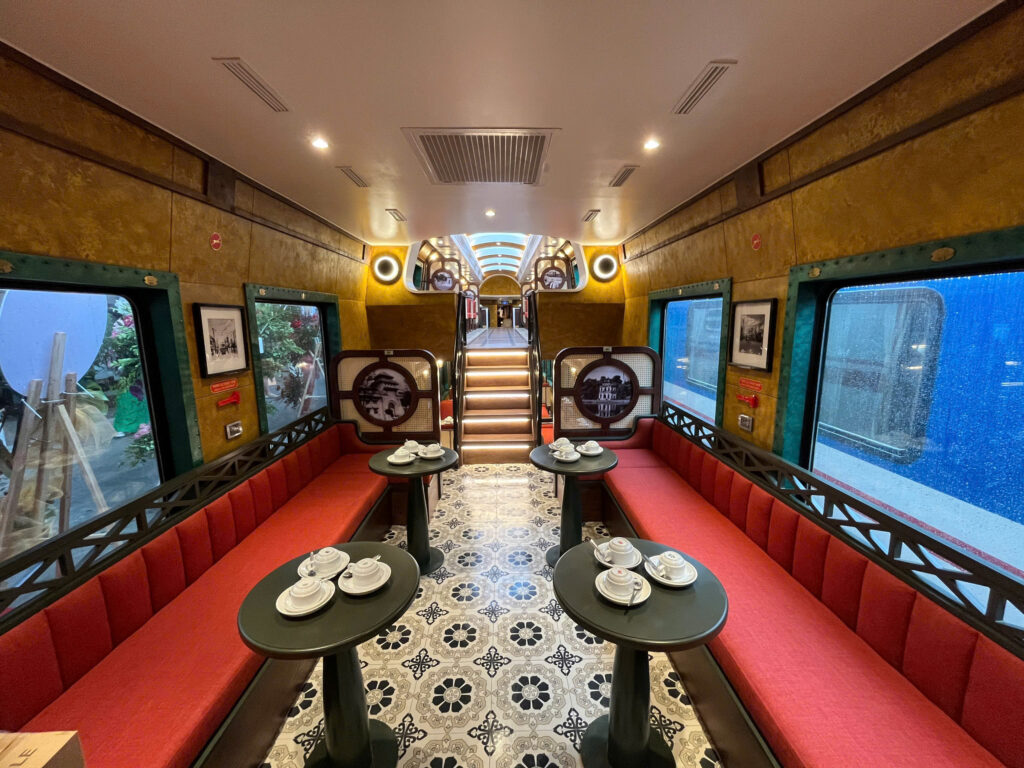
The funky space inside The Hanoi Train
Also in Hai Ba Trung District, Dong Mac Gate (Ong Mac Gate) served as a vital land and waterway passage, nowcorresponding with the intersection of Lo Duc and Tran Khat Chan Streets.
To the west, Cau Giay Gate (or Thanh Bao Gate), named after paper-selling villagers of Yen Hoa, was demolished in the late 18th century though its rustic legacy endures.
Finally, Cho Dua Gate marked the capital’s southern entrance. Known for its modest market shaded by coconut trees, it stood near the sacred Xa Tac altar, where Ly and Tran emperors offered homage to heaven and earth.
Onboard reenactments and stories about these gates offer a vivid window into Hanoi’s thousand-year civilization. The train becomes more than transport but a moving cultural stage where guests enjoy live traditional performances, regional tales, and savor the distinctive flavors of Hanoi and its surroundings.

A visitor enjoying The Hanoi Train experience
“Sitting on this train enables you to truly feel Hanoi’s modern and timeless spirit. It’s such a beautiful way to experience Vietnam,” shared tourist Thu Hang.
A highlight of the tour is a visit to Do Temple in Bac Ninh, a spiritual haven honoring eight emperors of the Ly Dynasty. Once known as Co Phap Palace, this Special National Relic offers quiet reflection amid ancient architecture, lush courtyards and time-worn stone pathways.
Here, guests can light incense,,explore tales of medieval kingship and embrace the sacred calm of this cultural treasure.
Including Do Temple in the itinerary increases the tour’s heritage value and enriches its spiritual and cultural depth. In addition to the historical sightseeing, visitors engage in meaningful community-based experiences like listening to Quan ho folk songs, meeting master artisans, learning to make Phu the (conjugal) cakes, and sampling other Bac Ninh’s OCOP (One Commune, One Product) specialties.
Innovation in Hanoi’s tourism landscape
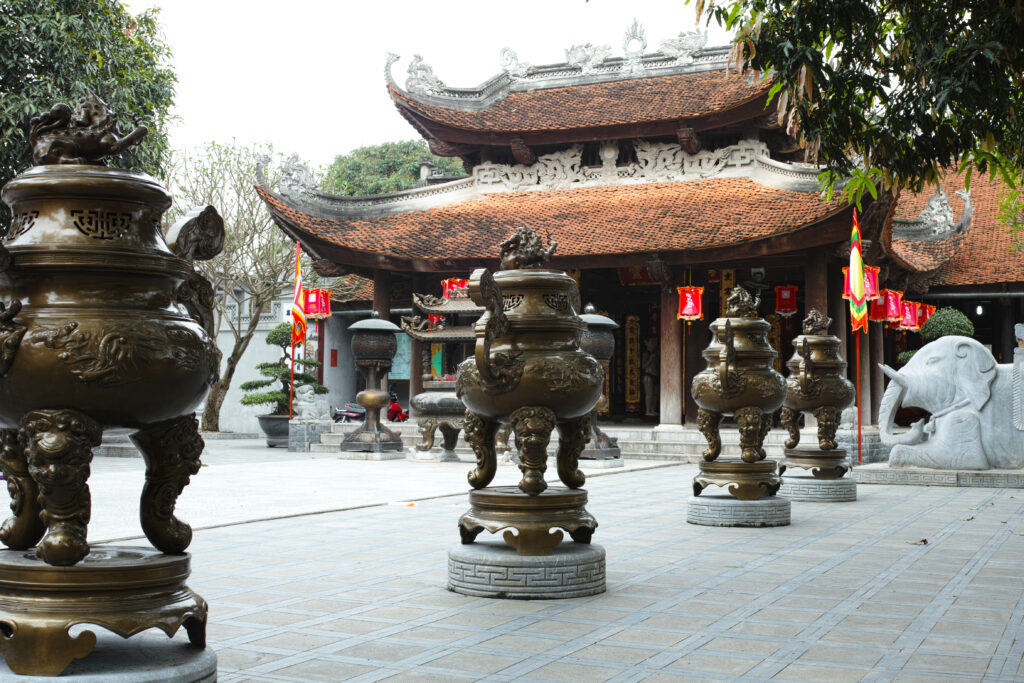
The serene and elegant atmosphere of Do Temple, Bac Ninh Province.
Travel experts agree that this themed railway journey appeals to a wide range of travelers, from local tourists passionate about history and culture to international explorers seeking authentic experiences or students on enriching extracurricular outings.
“The strength of this tour lies in its ability to merge heritage and real-world interaction. Visitors don’t just pass through Bac Ninh, they see it, feel it and live in it,” said Tao Duc Hiep, Chairman of BHL.
Located just 40 km from Hanoi, Bac Ninh boasts a rich tapestry of ancient relics, craft villages, folk festivals and cultural traditions. Combined with the romance of train travel, the journey becomes more convenient and memorable.
In this era of renewed tourism, “The Hanoi Train” emerges as a timely innovation, reviving the allure of classic rail travel while showcasing Vietnam’s rich cultural heritage and presenting a fresh symbol of King Bac region to the world.
By Jenna Duong – Huy Pham