UNESCO has officially inscribed Vietnam’s Dong Ho folk woodcut painting tradition on its List of Intangible Cultural Heritage in Need of Urgent Safeguarding, acknowledging the craft’s unique cultural significance and reinforcing national efforts to preserve this centuries-old artistic heritage.

The Vietnamese delegation attends the 20th session of the Intergovernmental Committee for the 2003 Convention on the Safeguarding of Intangible Cultural Heritage, taking place from December 8–13 in New Delhi, India. Photo: Bac Ninh Newspaper
Vietnam’s traditional craft of making Dong Ho folk woodcut paintings has officially been inscribed on UNESCO’s List of Intangible Cultural Heritage in Need of Urgent Safeguarding. The decision was adopted at the 20th session of the Intergovernmental Committee for the Safeguarding of the Intangible Cultural Heritage Convention (2003), taking place from December 8–13 in New Delhi, India.
This marks Vietnam’s 17th intangible cultural heritage recognized by UNESCO and its 37th heritage item across all UNESCO lists, including world cultural and natural heritage, intangible heritage, and documentary heritage.
According to the nomination file approved by UNESCO, the Dong Ho painting tradition is practiced in a village in the northern province of Bac Ninh, where artisans create vibrant prints using hand-carved wooden blocks.
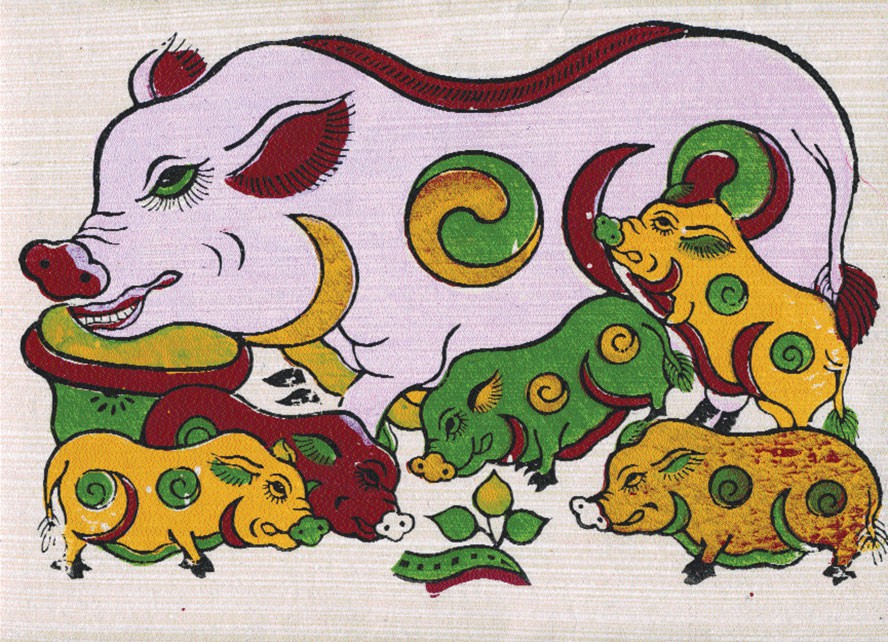
“Herd of Pigs,” a classic example of Vietnam’s Dong Ho folk painting tradition.
Its uniqueness lies in a fully handcrafted process and the use of natural materials familiar to Vietnamese daily life, from outlining designs with natural ink and meticulously carving wooden blocks to mixing colors from plants, brick powder, and bamboo leaves. The prints are made on diep paper, produced from finely ground shell powder blended with glutinous rice paste, giving the paintings their signature shimmering texture.
Themes commonly featured in Dong Ho paintings reflect the spiritual and cultural life of ancient Vietnamese communities, ranging from worship practices and historical tales to everyday activities and tranquil rural landscapes.
UNESCO’s inscription recognizes the outstanding cultural value of Dong Ho folk paintings while providing an essential legal foundation for Vietnam to implement stronger measures to revitalize the craft, support artisans, and pass this distinctive skill on to younger generations as it faces the risk of fading away. The listing also enriches Vietnam’s growing cultural heritage map on the global stage and helps promote the unique identity of the Kinh Bac region.
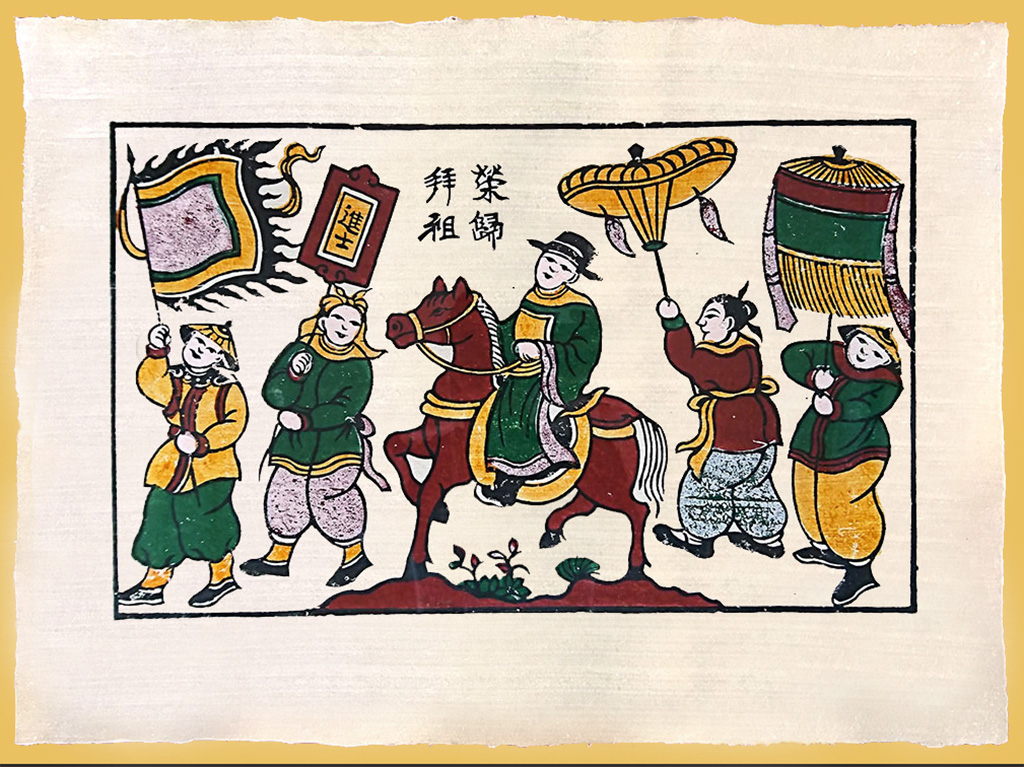
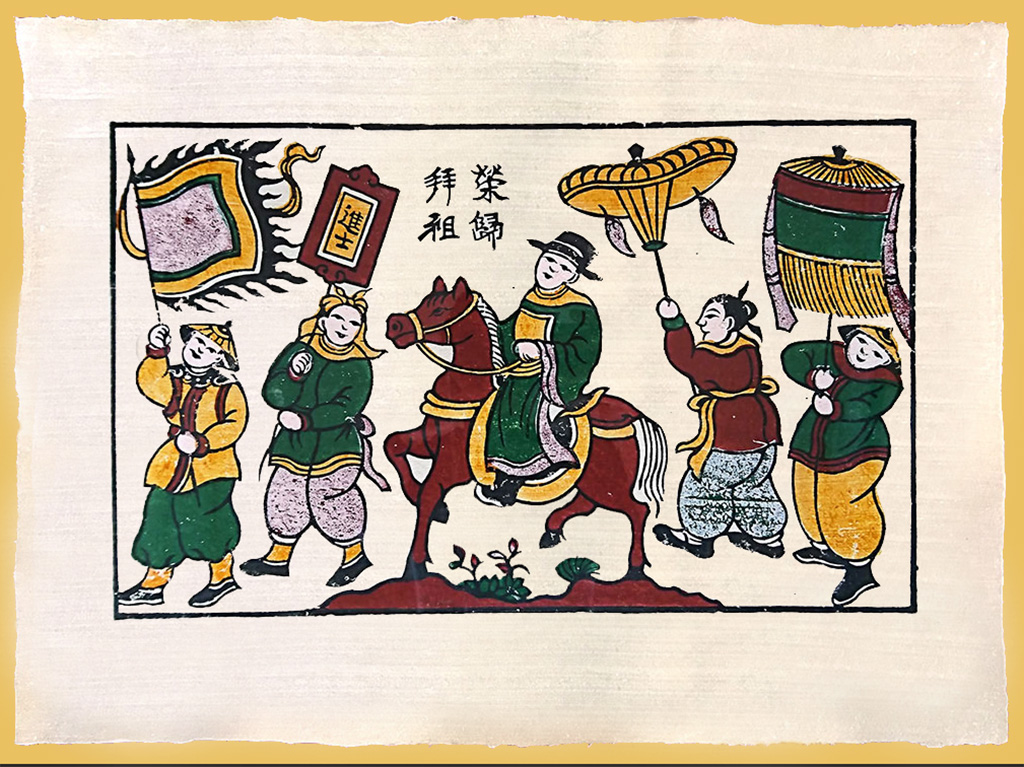
The “Vinh Quy Bai To” or “Returning Home in Glory to Pay Respect to Ancestors,” a celebrated work from Vietnam’s Dong Ho folk painting tradition.
The approved safeguarding plan outlines seven key goals, including heritage inventory work, training programs for young practitioners, improving access to materials, expanding markets, developing new designs, and providing protective equipment for artisans. All proposed activities place the community at the center and emphasize sustainability.
To date, Vietnam has 37 UNESCO-recognized heritage elements. Bac Ninh is home to five intangible cultural heritage items of humanity, Quan ho folk singing, Dong Ho painting, Ca tru singing, the Worship of Mother Goddesses, and Huu Chap tug-of-war- along with a shared World Heritage site (the Yen Tu- Vinh Nghiem- Con Son, Kiep Bac Complex).
By Nhat Khanh